● Burin, Occupied PalestinianOlives are an important economic and traditional backbone of Palestinian life. As settlements continue to expand into the West Bank, this series explores how harvesting olives represents a form of resistance.
Mr. Jamal Abdalhade is the largest landowner in the Palestinian community of Burin. Despite settler violence and property vandalism, he continues to pass along the tradition of harvesting olives to the younger generation. This year [2017], he will use nearly all the profit from the harvest to pay for his son's legal representation after he was arrested during a confrontation with settlers.
"I'm only in pain. They [settlers] yell at us, this is the land of Israel, get out! I'm not afraid for my life, I'm afraid for these children." — Mr. Jamal Abdalhade
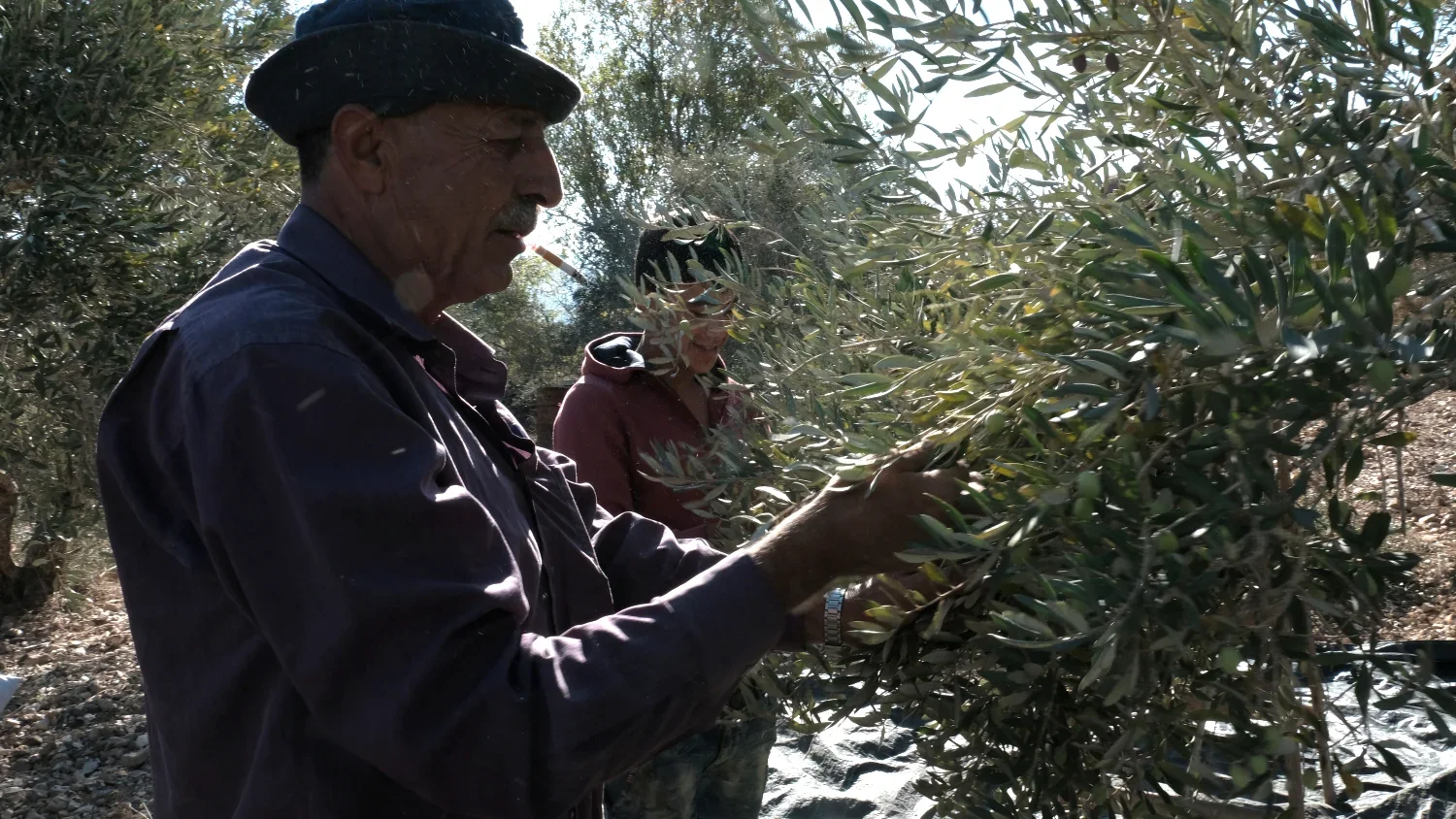
Mr. Jamal Abdalhade is mentoring young Hakam on olive picking and his love for his land. Mr. Adalhade owns 7000 dunums in the village of Burin, Palestine which is located in a valley surrounded on both slopes by Israeli settlements.
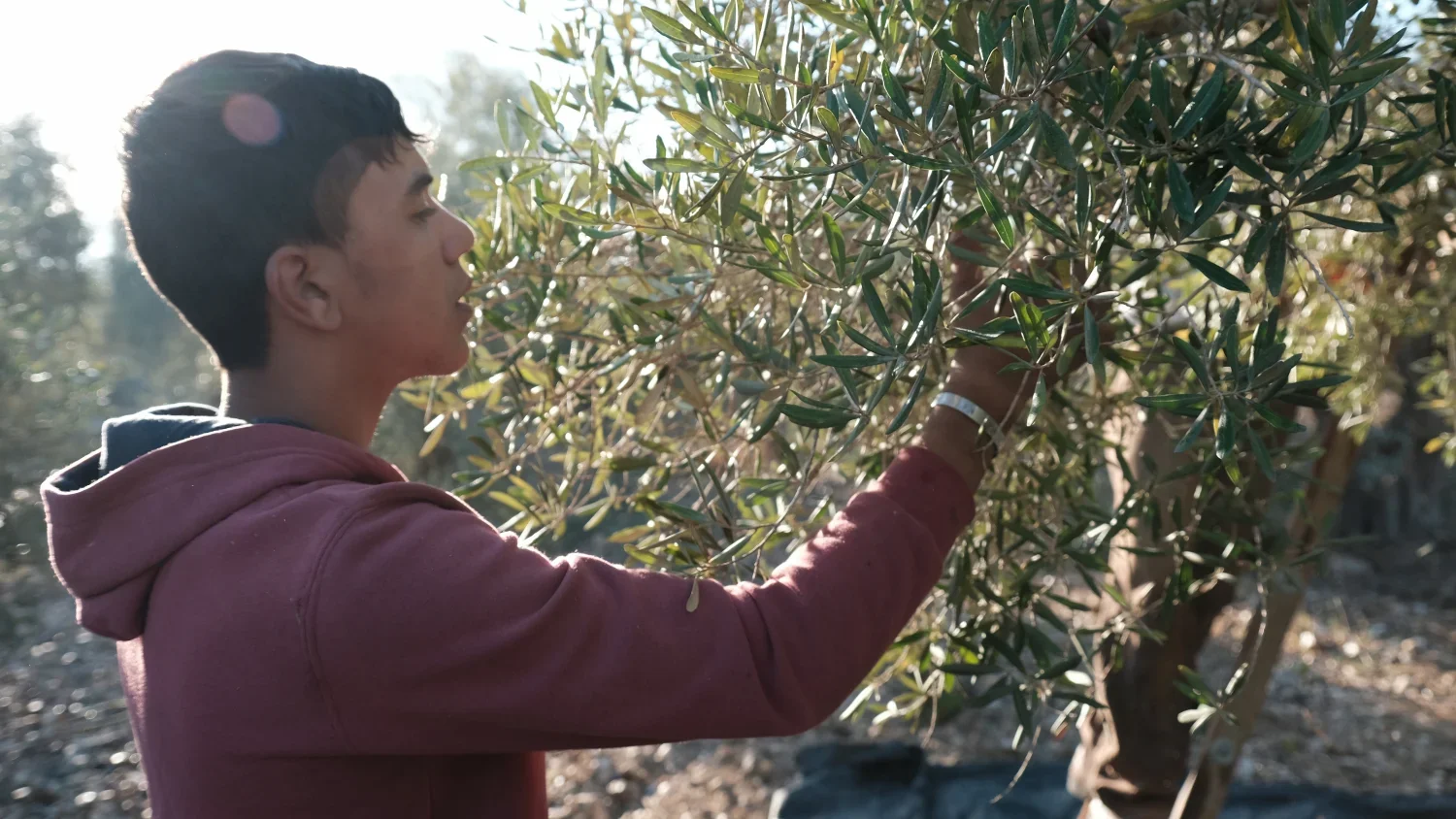
Focusing on his work, 16-year-old Hakam a resident of Burin, left school in grade 7 to find employment. "I enjoy picking olives," says Hakam. "This is our land."
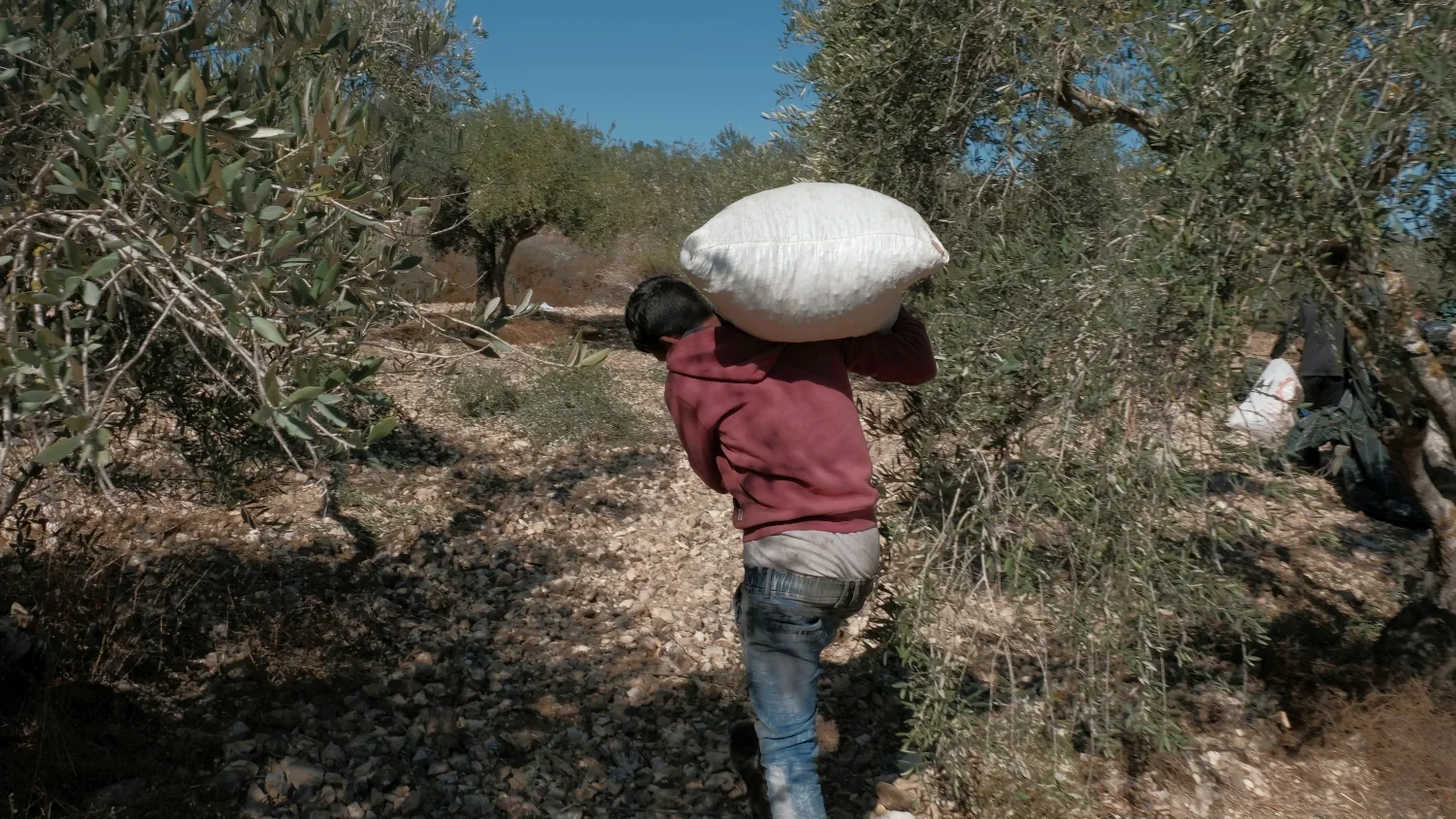
A sign of a good yield, full bags being carried away for processing.
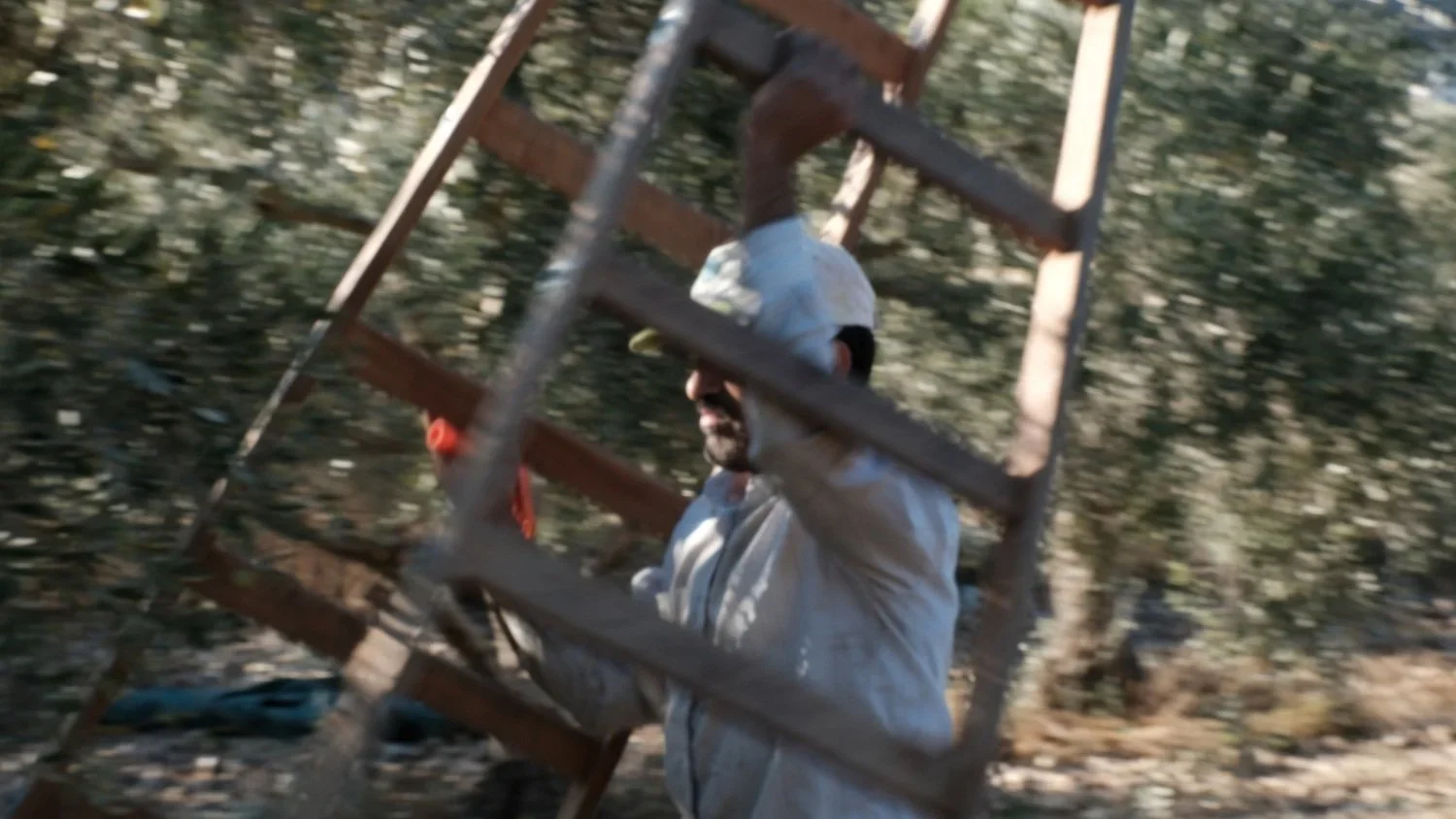
Tareq Eed hurridly rushes with his ladder to the next olive tree. A resident of Burin, he takes time off his normal job at the Palestinian National Security to work on the harvest. "To me picking olives is a different kind of resistance," says Mr. Eed. "When they (Israeli settlers) invade our land, I have to behave like a normal Palestinian. I cannot act on my own, it must be coordinated."
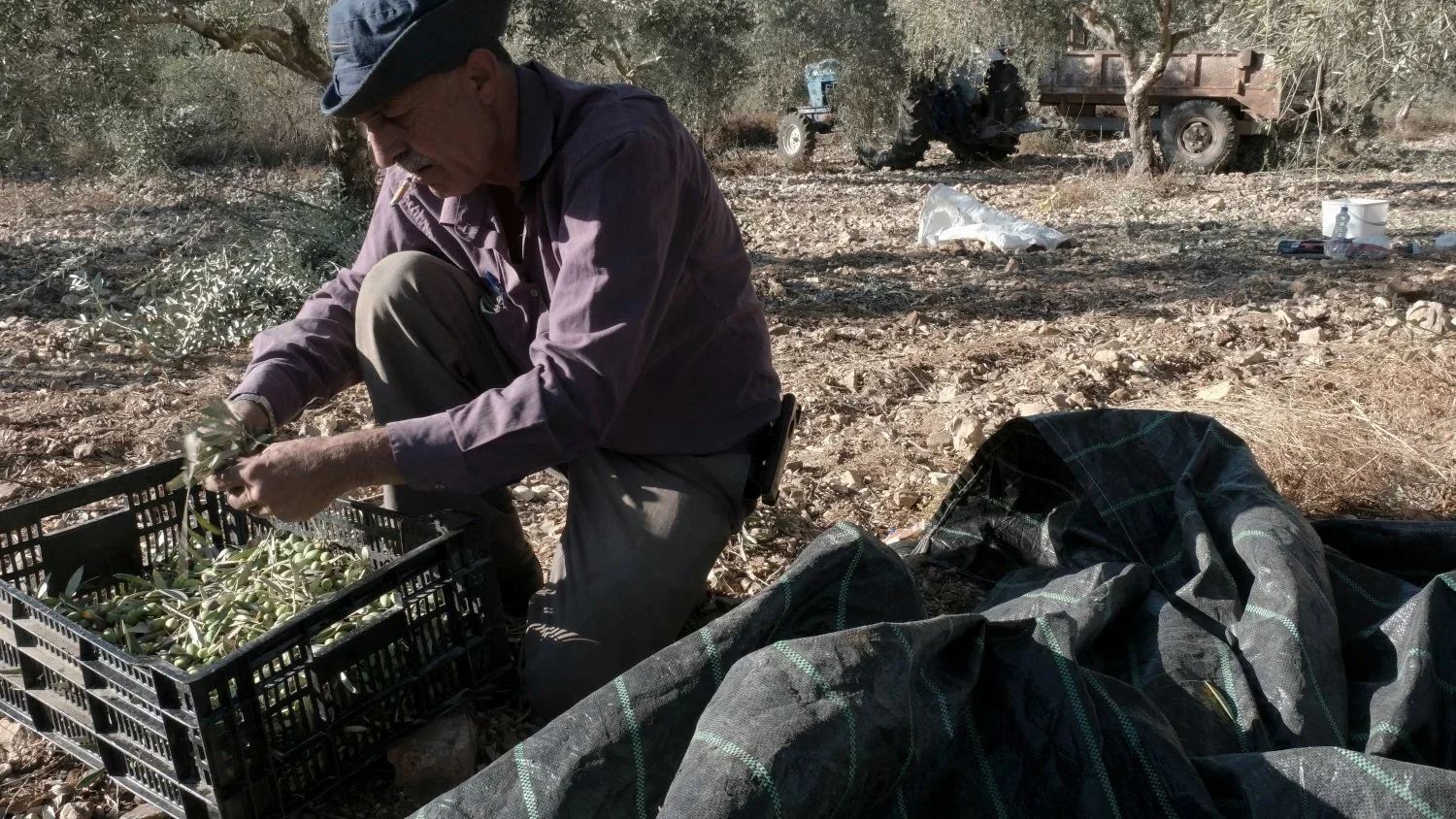
Nothing is wasted. Mr. Abdalhade sifts through the pickings removing leaves and twigs in preparation for bagging.
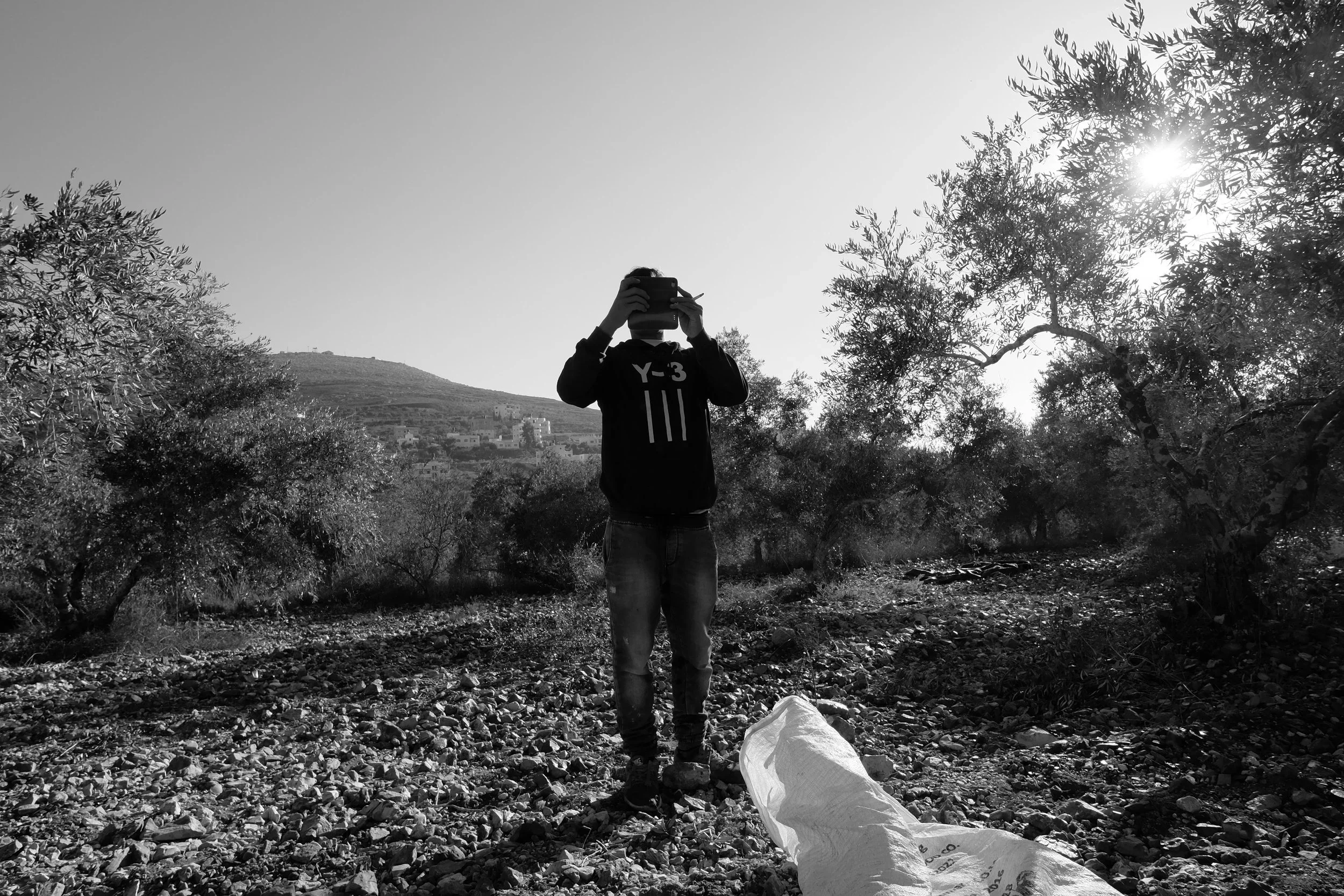
Hakam photographs the photographer.
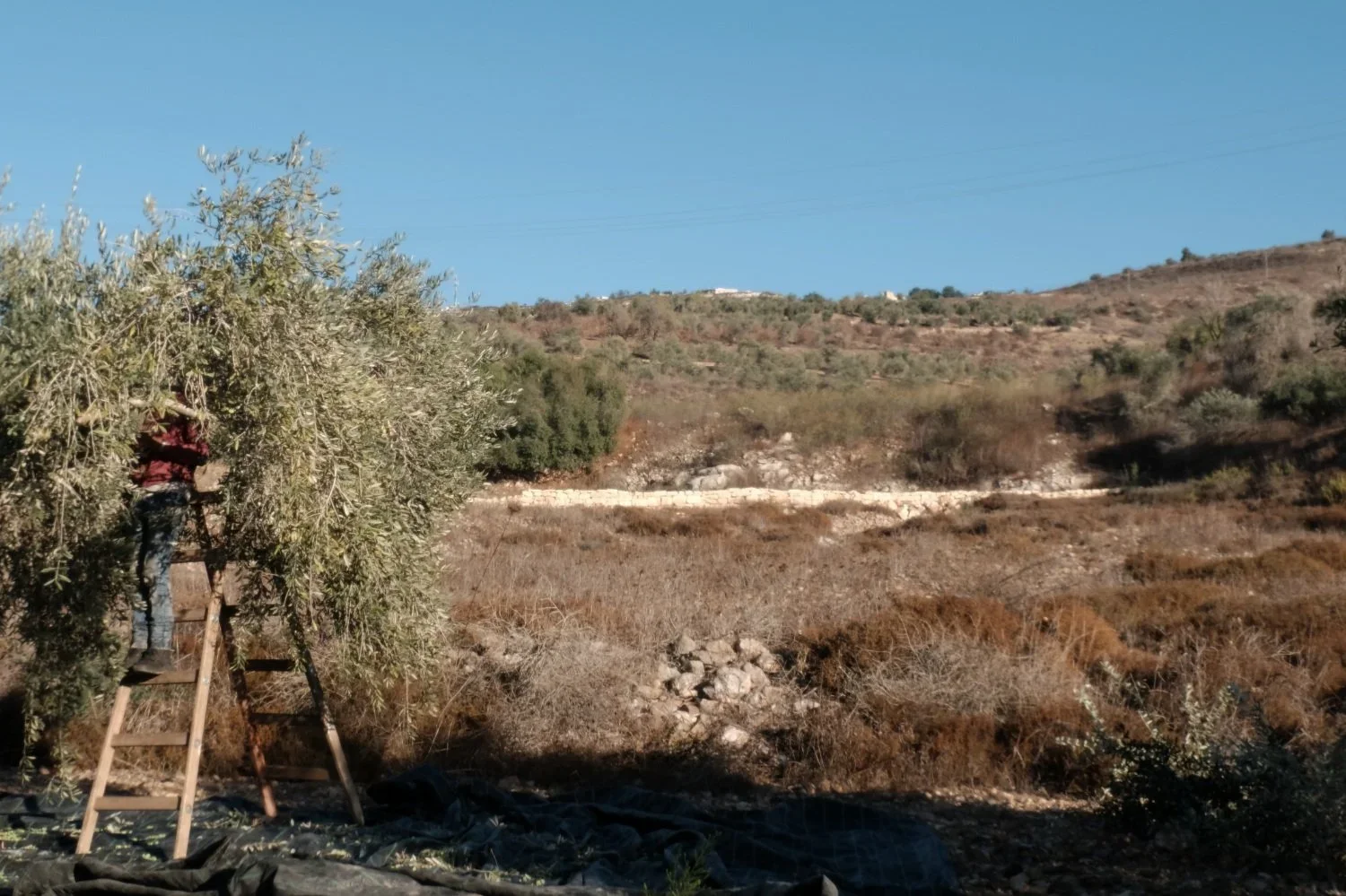
The Israeli settlement of Yitzhar can be seen from Mr. Abdalhade's olive grove. Seperating the land is highway 60.
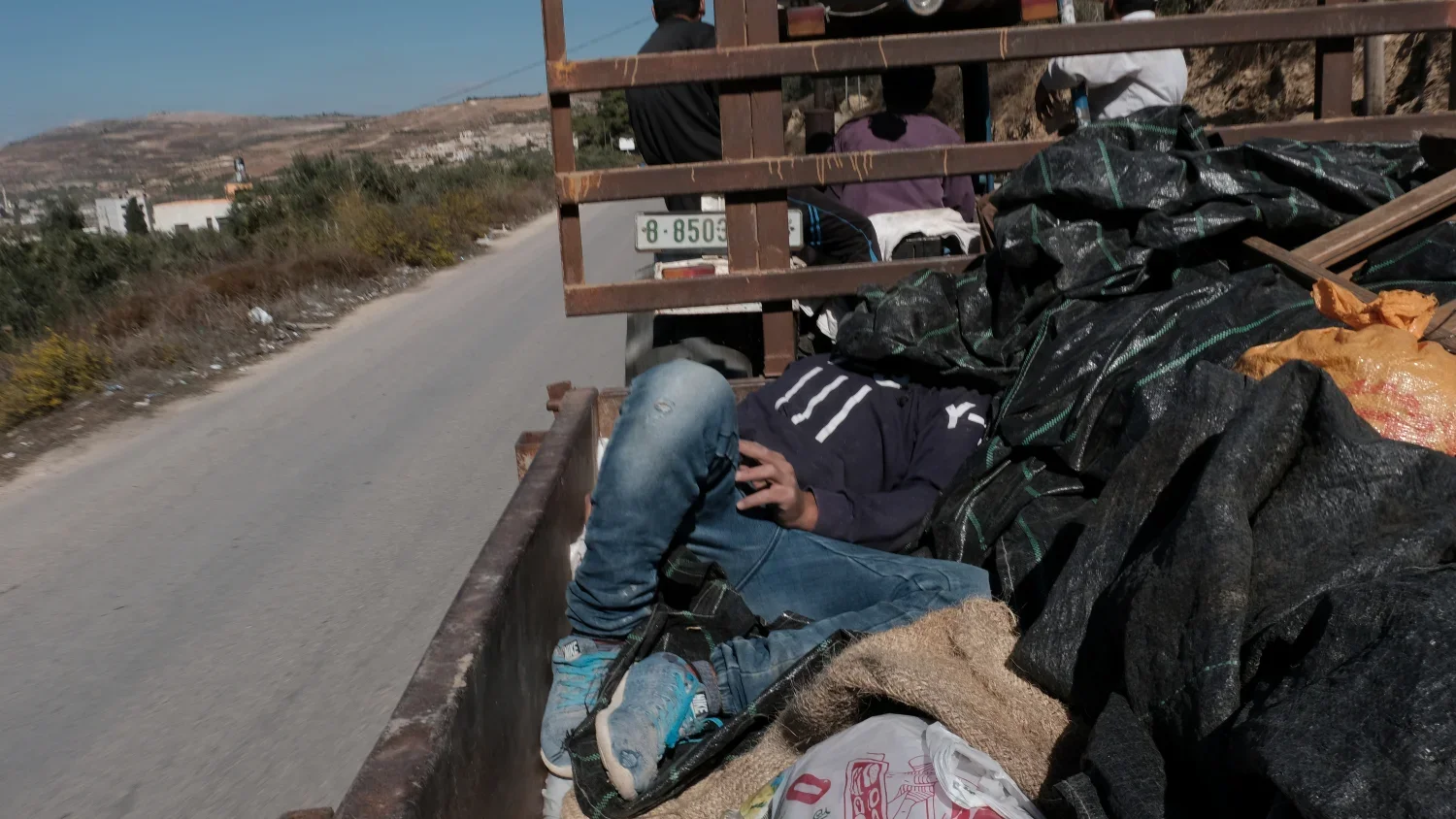
From dawn until dusk, a harvester in Burin takes a break from the midday heat shielding his face and catching a breath as they travel to the next grove.
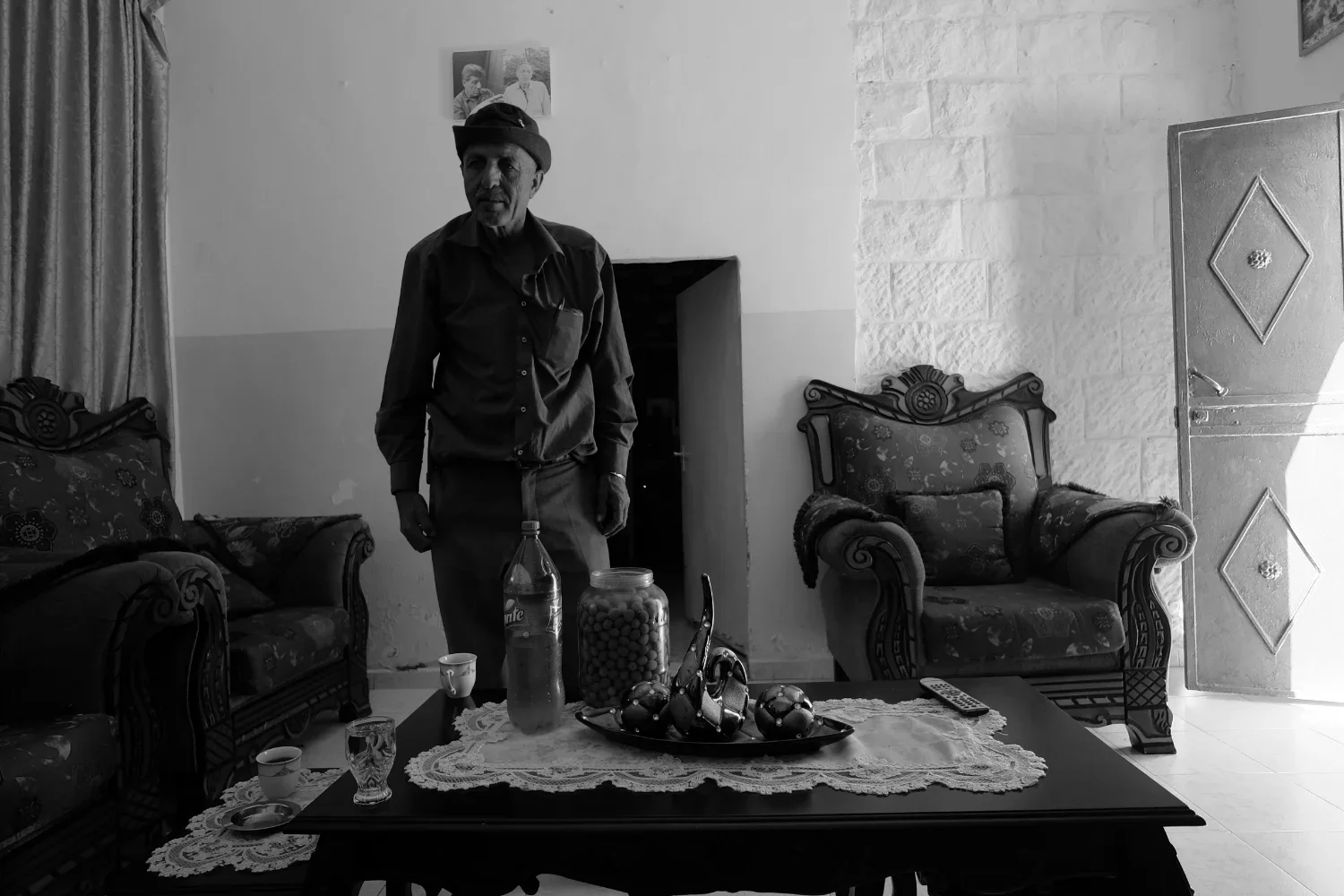
Mr. Abdalhade in his home in Burin explains how his son was recently arrested during a settler attack. "They (settlers) yell at us, this is the land of Israel, get out!” "It’s very hard because every year Burin is losing youth because we don’t have jobs. I am the biggest farmer in the area and they want to weaken me by arresting my son before the harvest began."
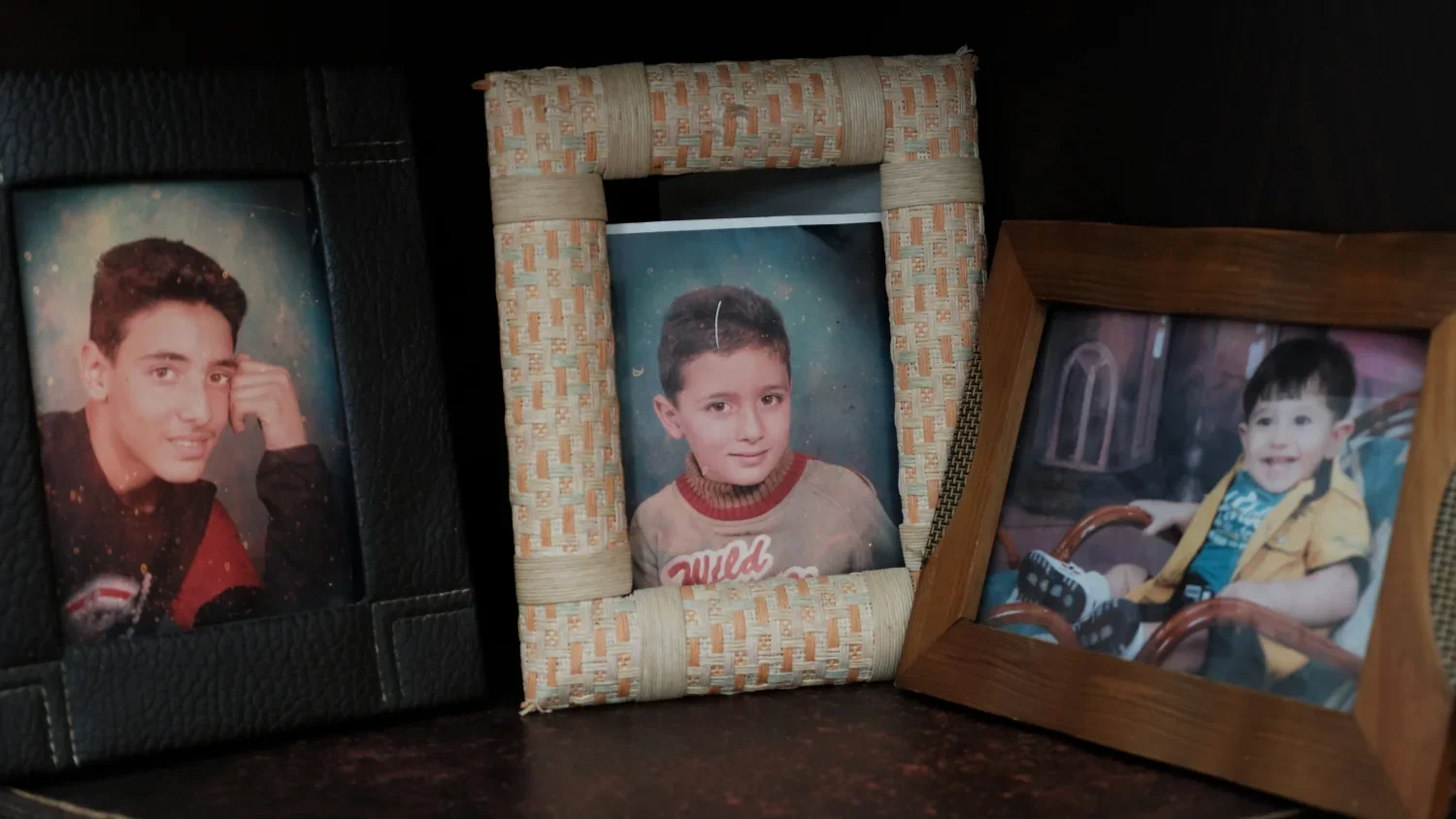
A childhood photo (center) of Mr. Abdalhade's son Mohammed who was recently arrested during a settler attack. Now 17-years-old, Mohammed has been in jail for over a month with little to no information shared with the family on his exact whereabouts. The family will appoint a lawyer at a cost of 15,000NIS to represent him in court. The cost of the lawyer is the equivalent to the families earnings from this seasons olive harvest.
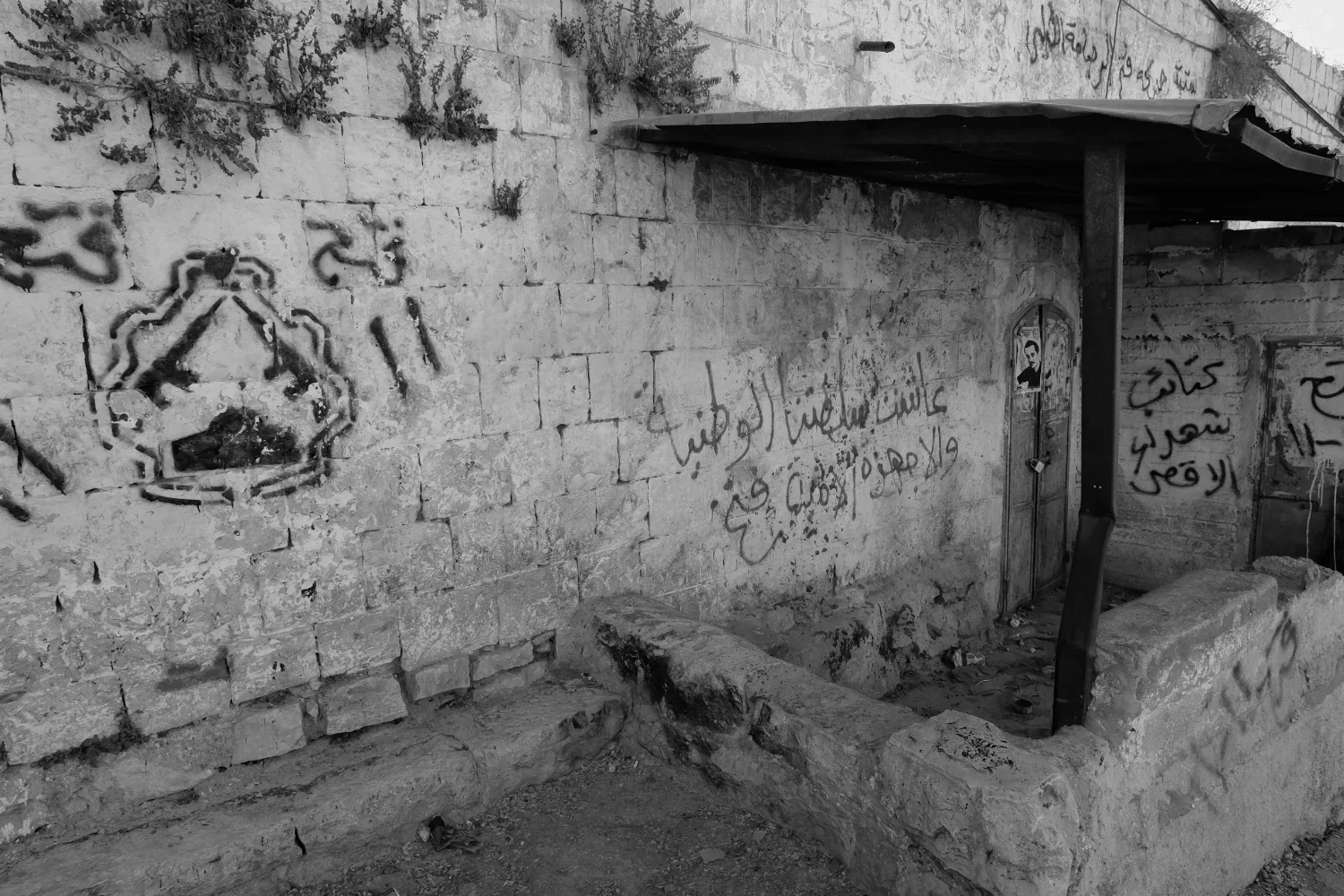
Symbols of resistance are painted throughout the community of Burin. Pictured here is a symbol of Fatah, the largest faction of the Palestinian Liberation Organization (PLO), generally considered to have a strong revolutionary history and ties to Yasser Arafat. Also pictured is a poster of Ghassan Kanafani, a Palestinian writer and member of the Popular Front for the Liberation of Palestine (PFLP) who was assassinated in 1972 by Mossad, an Israeli counterterrorism organization.
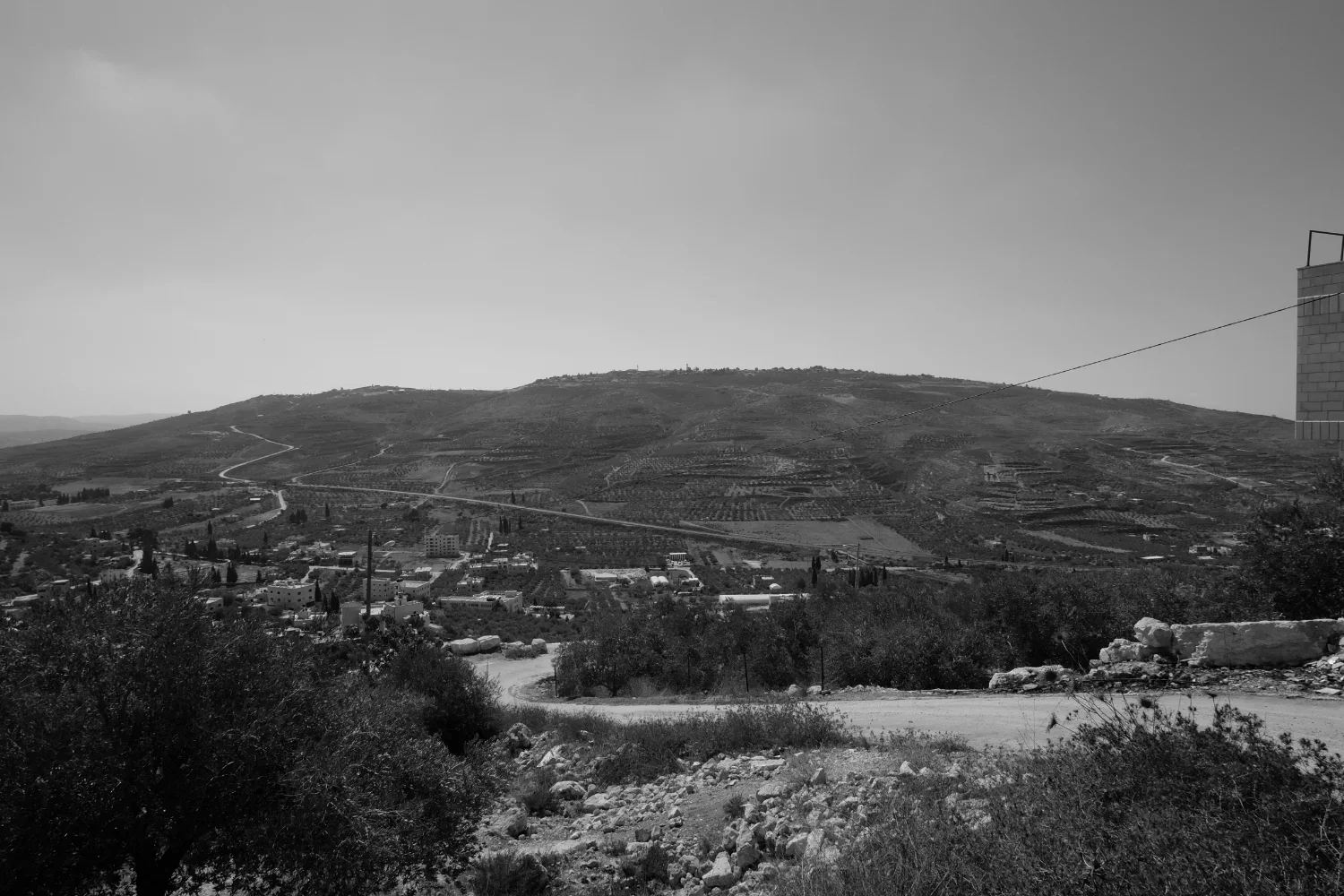
A view of the Israeli settlement Yitzhar, from Burin.
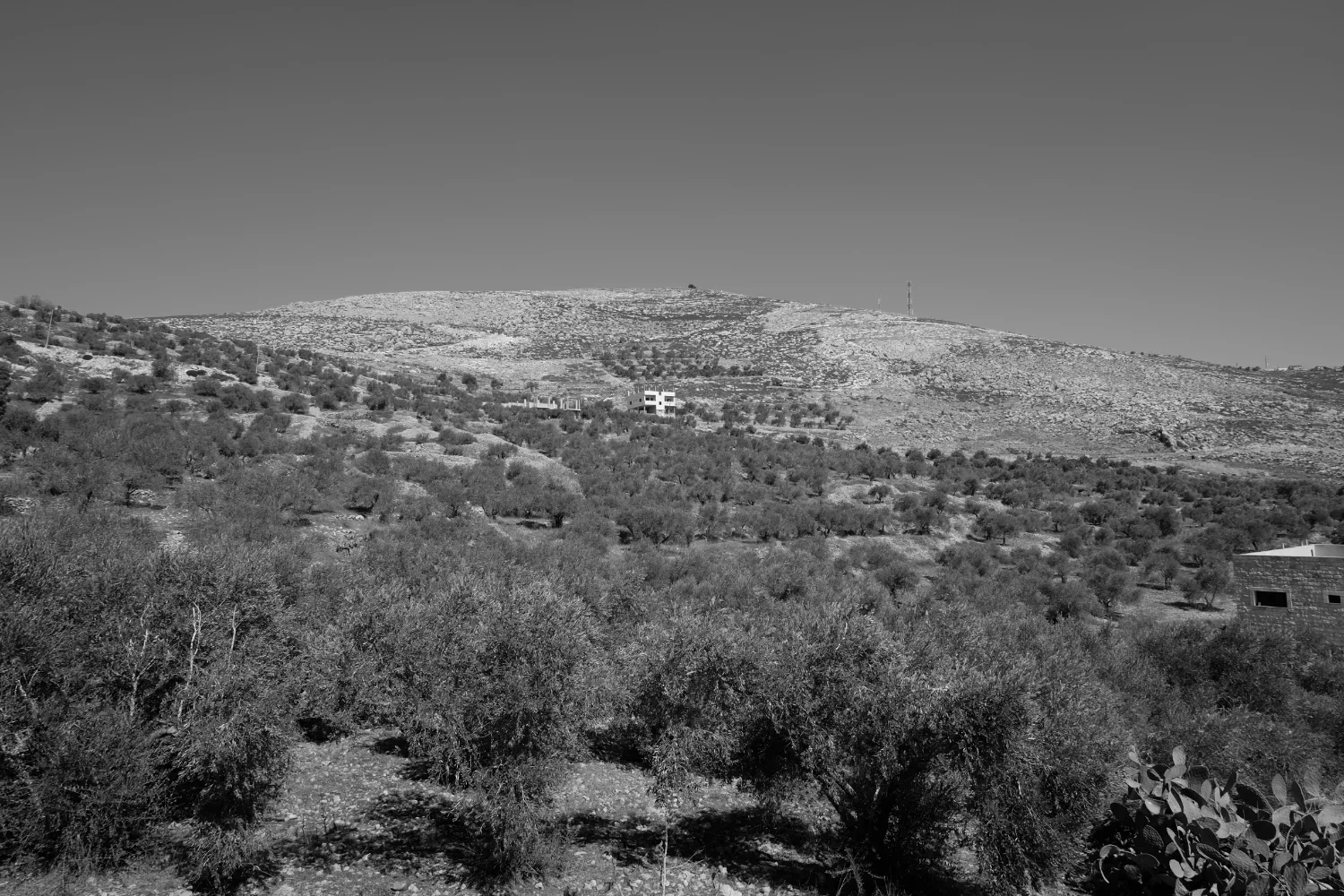
A view of the Israeli settlement Giv'at Sne Ya'akov from Burin.
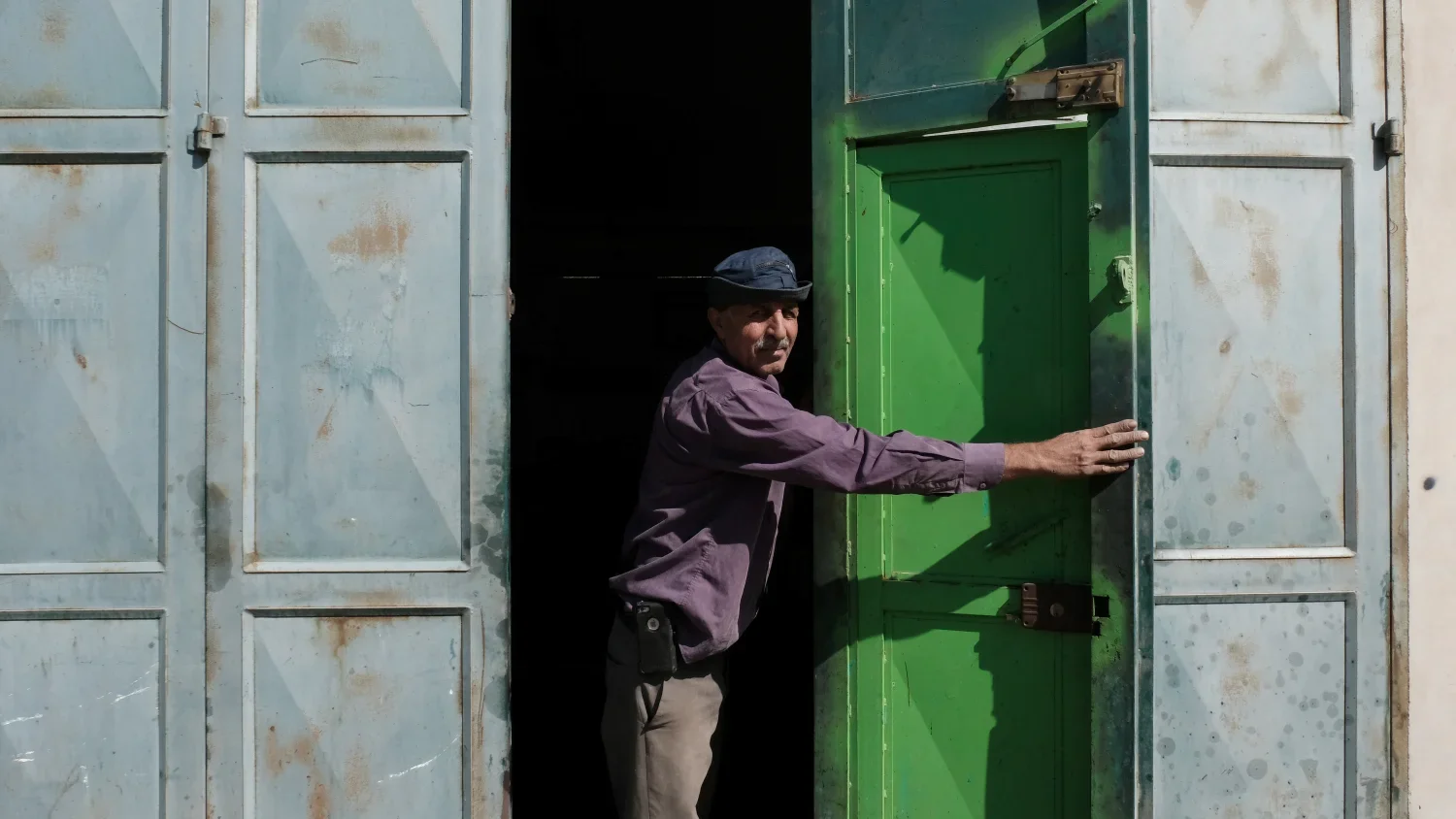
Mr. Abdalhade opens the door to his families olive pressing facilities. He and his 6 brothers worked together to finance and build the warehouse that serves Burin and the surrounding communities Irak Burin, Madama, Huwara, Asira Al-Qibliya, Urif. For every 13 kilos of olive they press, they take 1 kilo for payment. "Families in this area don't have money to pay me," he says. "Instead we collect oil as payment."
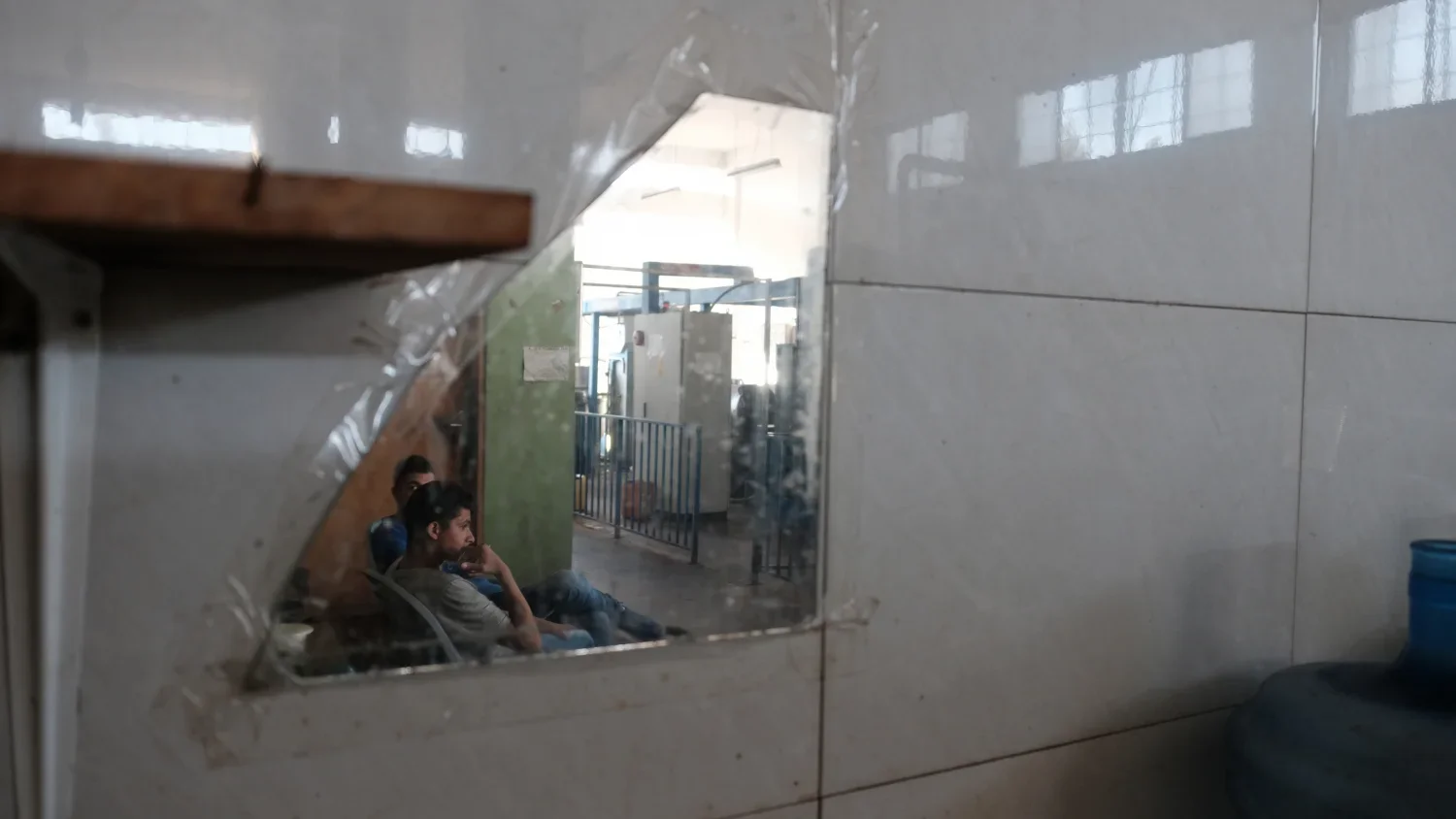
In the late afternoon it starts to get busier as harvesters return from the groves with their yield. These helpers patiently wait their turn for bottling.
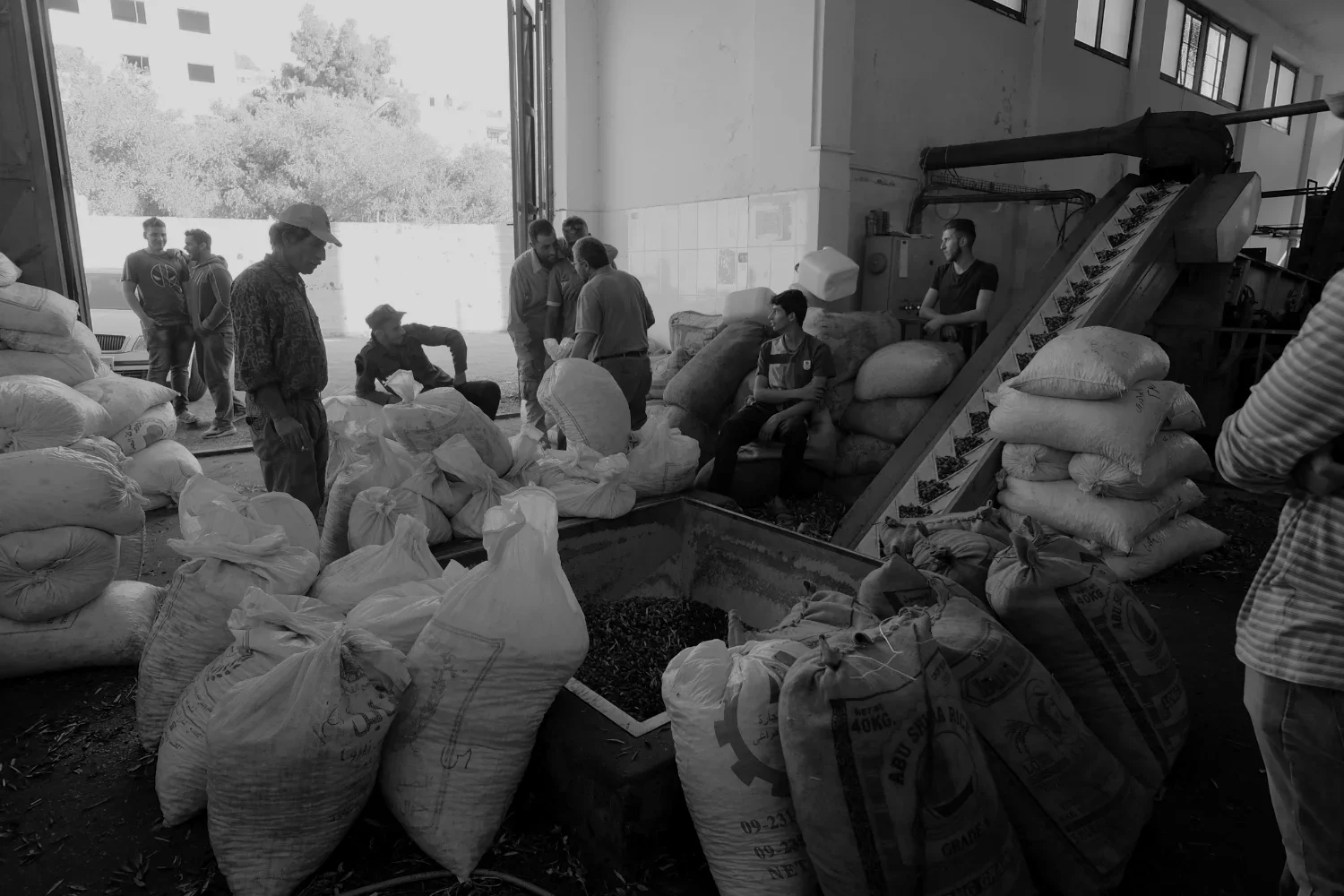
Although there is much work to be done, processing olives is as much a community gathering place as a place of business. Farmers and harvesters wait together talking, smoking and sharing some laughs until it's their turn to process and bottle their yield.
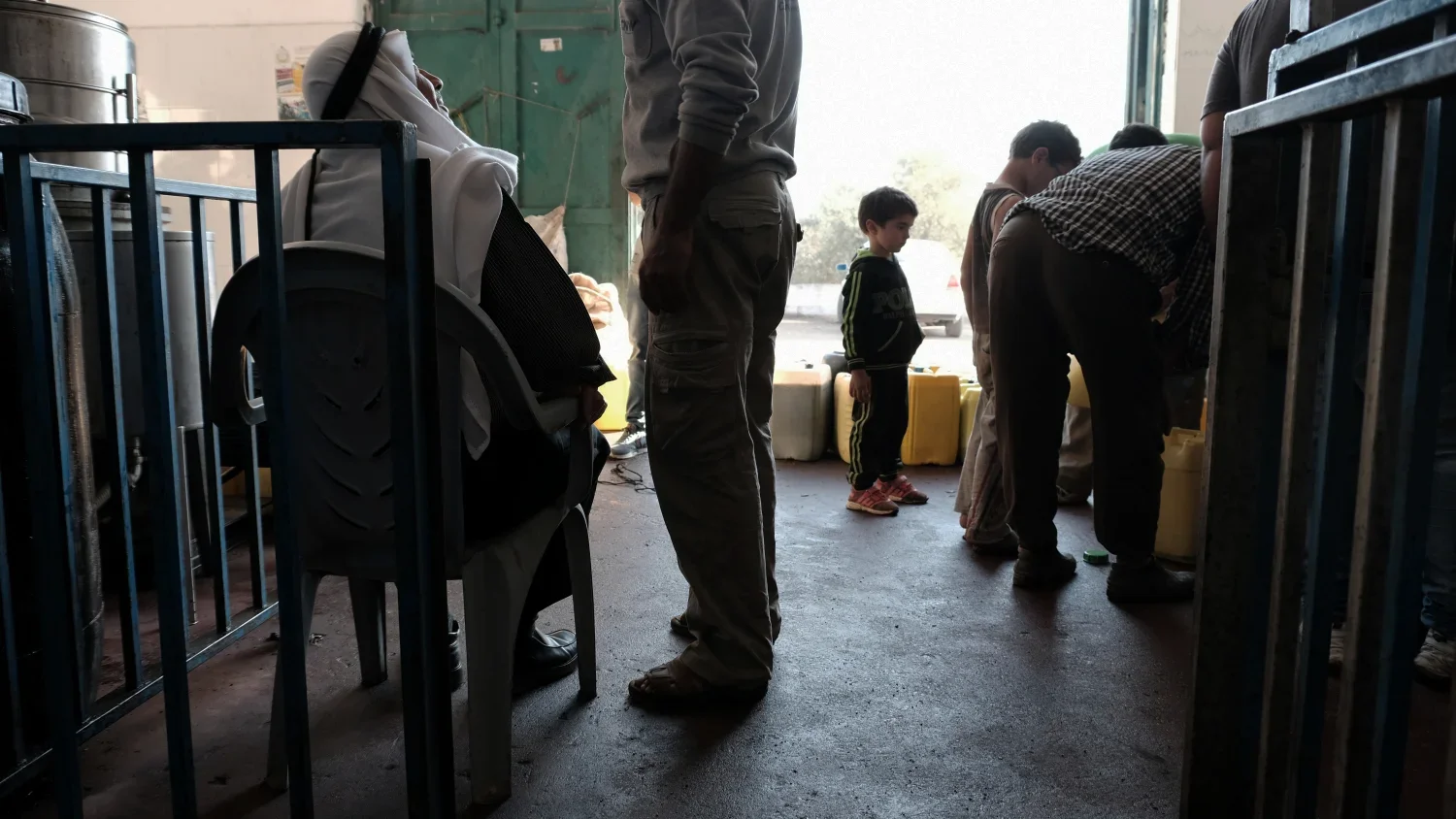
The sun is starting to set, but the activity at the olive press only builds. Farmers sit next to their bottles waiting to be weighed and make payment in olive oil in exchange for the processing.
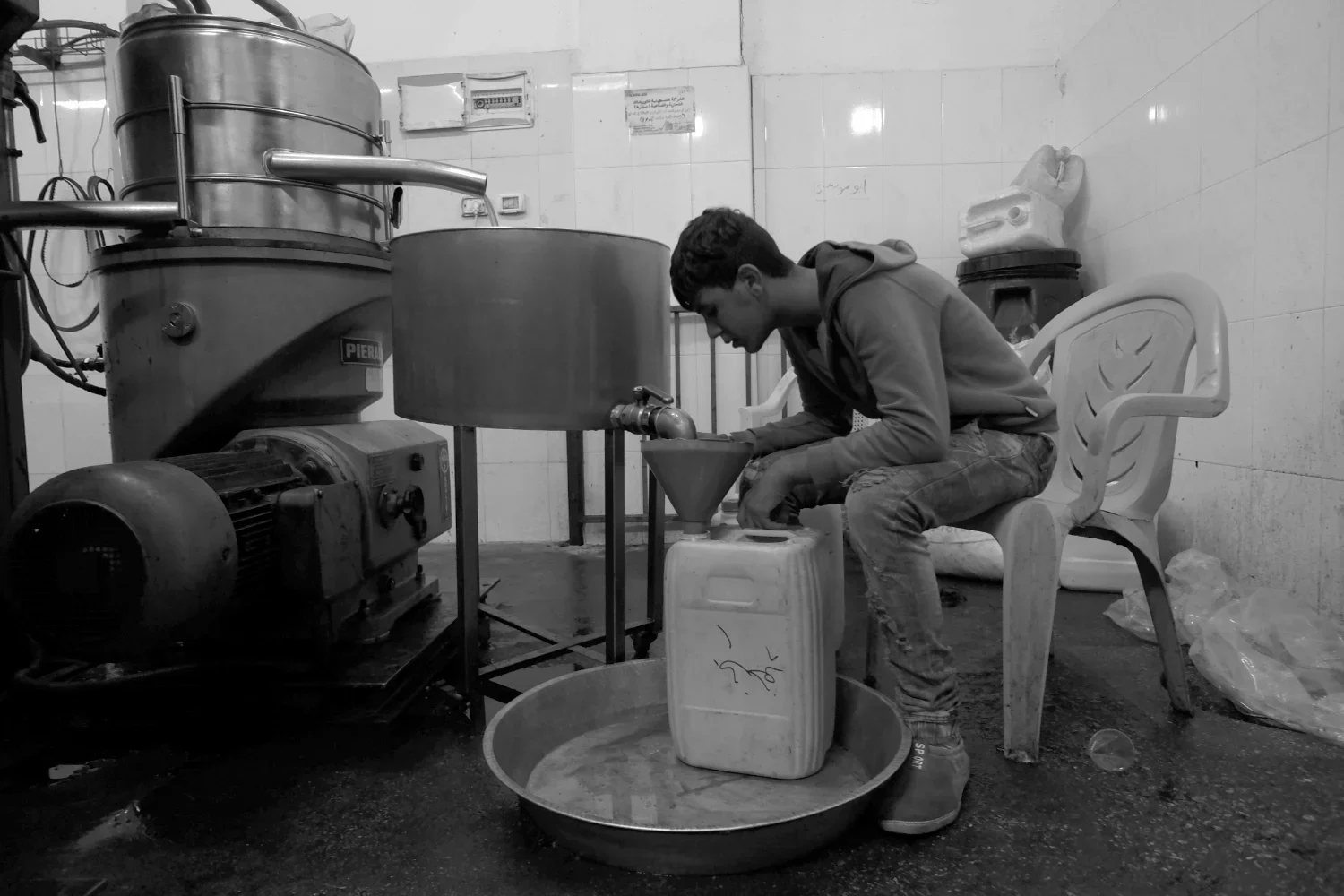
Hakam, Mr. Abdalhade's young worker, sits next to the press bottling today's harvest.
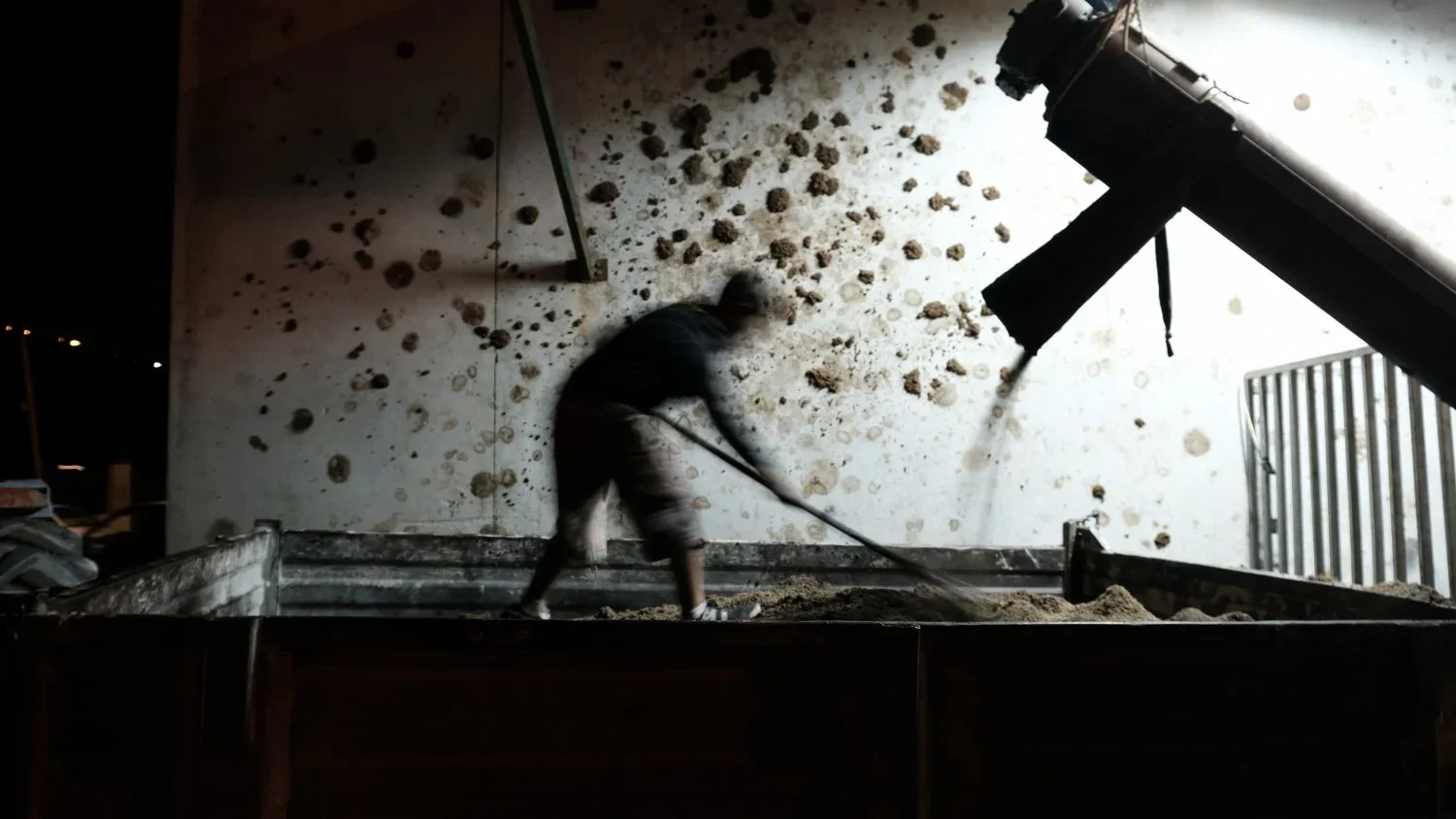
Into the night a young boy works in a giant metal container raking dried olive waste recycled from the press. The light, almost sawdust texture of the dried olive material is used for fires during the winter.