● EthiopiaStory Published in Hayo
Depending on your comfort zone, or willingness to abandon it, a journey through Ethiopia is like an epic adventure story you wish you wrote. Life is simple, hard–beautiful. The people are kind and inquisitive, guided by faith and strong ties to family. There is also just the right mix of opportunists and swindlers to keep you on your toes.
Ethiopia has been aptly recognized for its cultural richness and incredible landscapes, but be ready, you’re going to have to work for it. The tourism infrastructure is in its infancy and local purveyors struggle to understand how to meet the demands of expectant ‘Farangi’. No doubt this will change in the coming years as travelers learn more of what Ethiopia has to offer. My advice is not to wait. The haphazardness of it all is what makes the experience that much more special.
So what exactly are you getting yourself into? If hiring a personal driver isn’t your style or budget, then cramming into the back of minibus with 12 people and some livestock might be. You will have to haggle for a fair price on accommodations or a lift in a Bajaji (tuk tuk). You will get used to mosques calling prayer at 4 am, well before your alarm. You will have to get comfortable being around men carrying Kalashnikovs and have a stomach for passing a bottle of Ouzo around a fire.
The reward comes after that 12 hour bus ride they said was 6, when you lose yourself in the ancient tunnels of Lalibela and pretend you’re Indiana Jones. You’ll drink freshly roasted coffee with strangers as Frankincense smoke dances around your feet. You will walk among hundreds of wild Gelada Baboons in the Simien Mountains 3500m overlooking the valley below. You will sit under the vastness of the night sky sharing a meal with friends you’ve made while camping in a traditional Hamar village. I could go on…
The hardship of it all is sickly romantic. It’s the stuff of films and epic adventure novels. Each moment you are there, you shed another layer. You also get more dusty, weathered and creative with minimal resources. If you’re thinking of going, consider making a pact with yourself to push beyond your comfort zone.
Be open. Go with a willingness to truly let the wind take you where it may. Try. Whether it’s haggling, or trial and error on transportation, it’s usually worth it. Share. Ethiopia is poor and the government controls nearly every facet of life. When given the opportunity, share ideas, information, or even the clothes on your back. All will be deeply appreciated.
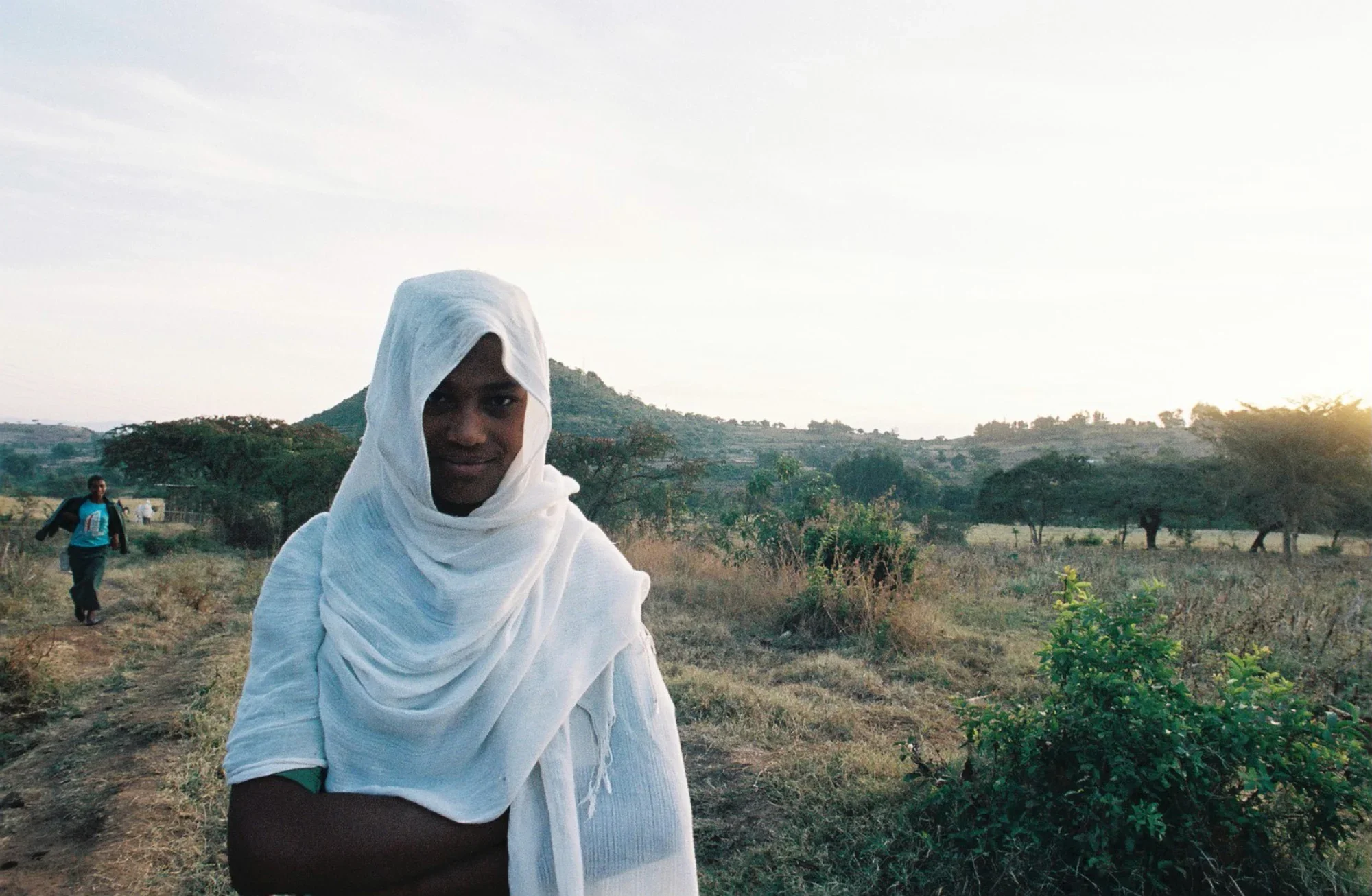
A young Ethiopian girl walking at dawn to school in the egalitarian community of Awra Amba. Founded in 1980 by Zumra Nuru, the community is home to over 450 residents and promotes gender equality. It remains controversial within religious communities in Ethiopia, as residents don't identify with either of the countries two major religions, Islam or Christianity.
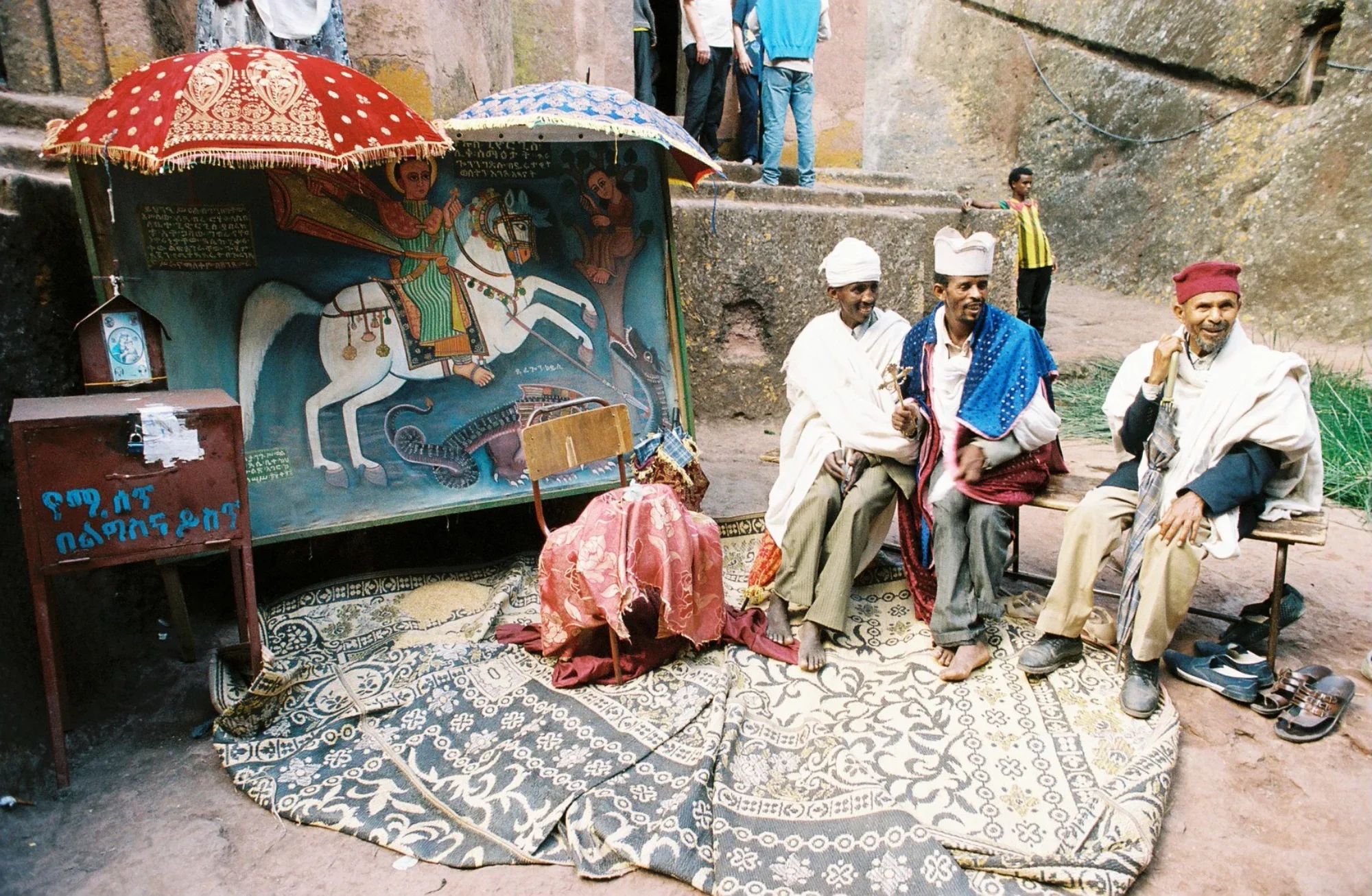
Amharic priests seated outside the Church of St. George offer blessings to pilgrims during Orthodox Christmas in Lalibela. Considered one of Ethiopia's most sacred cities, the area was declared a UNESCO World Heritage Site in 1978.
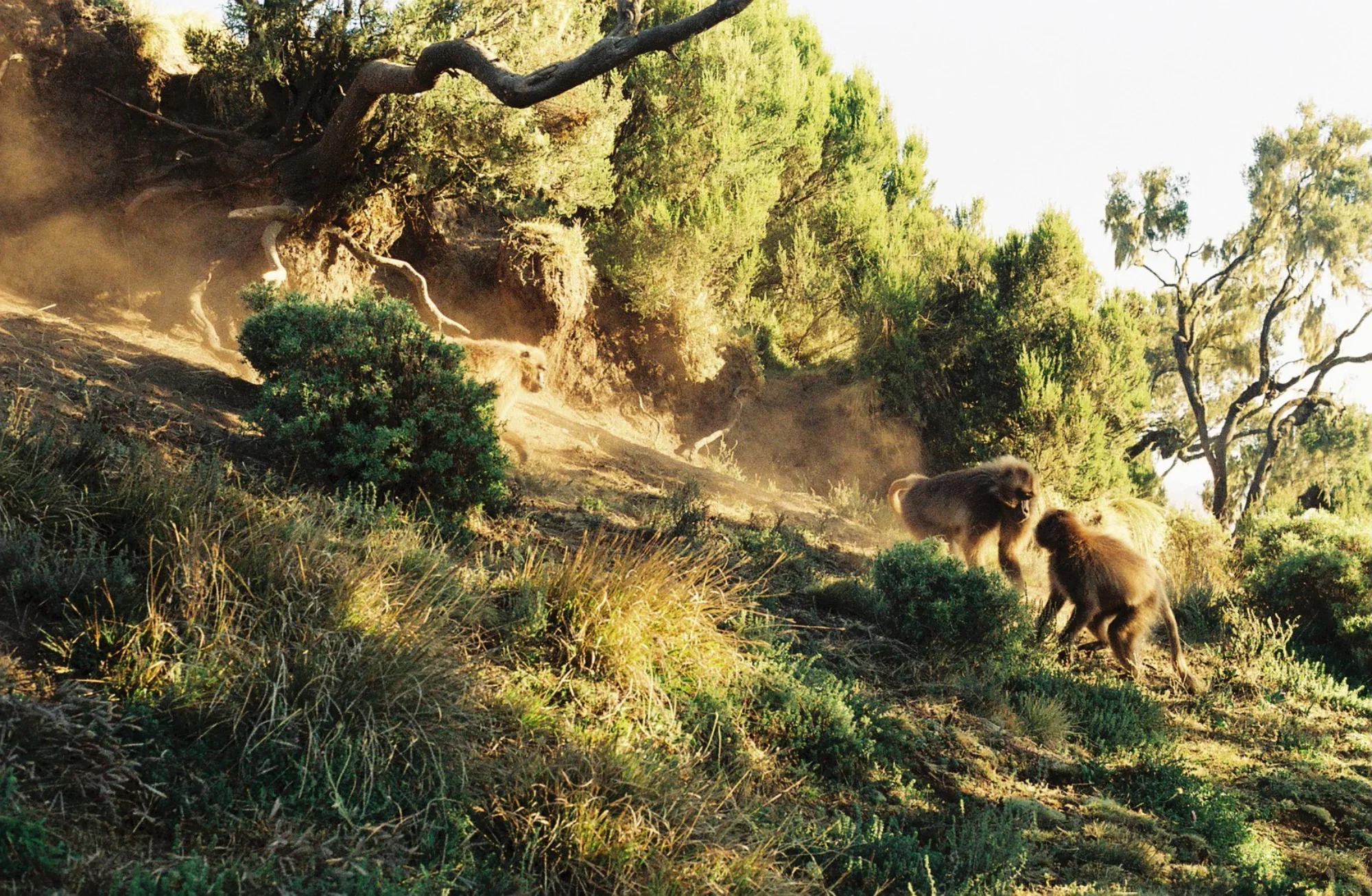
A family group of Gelada Baboons tustle with eachother as the sun rises in the Simien Mountains.
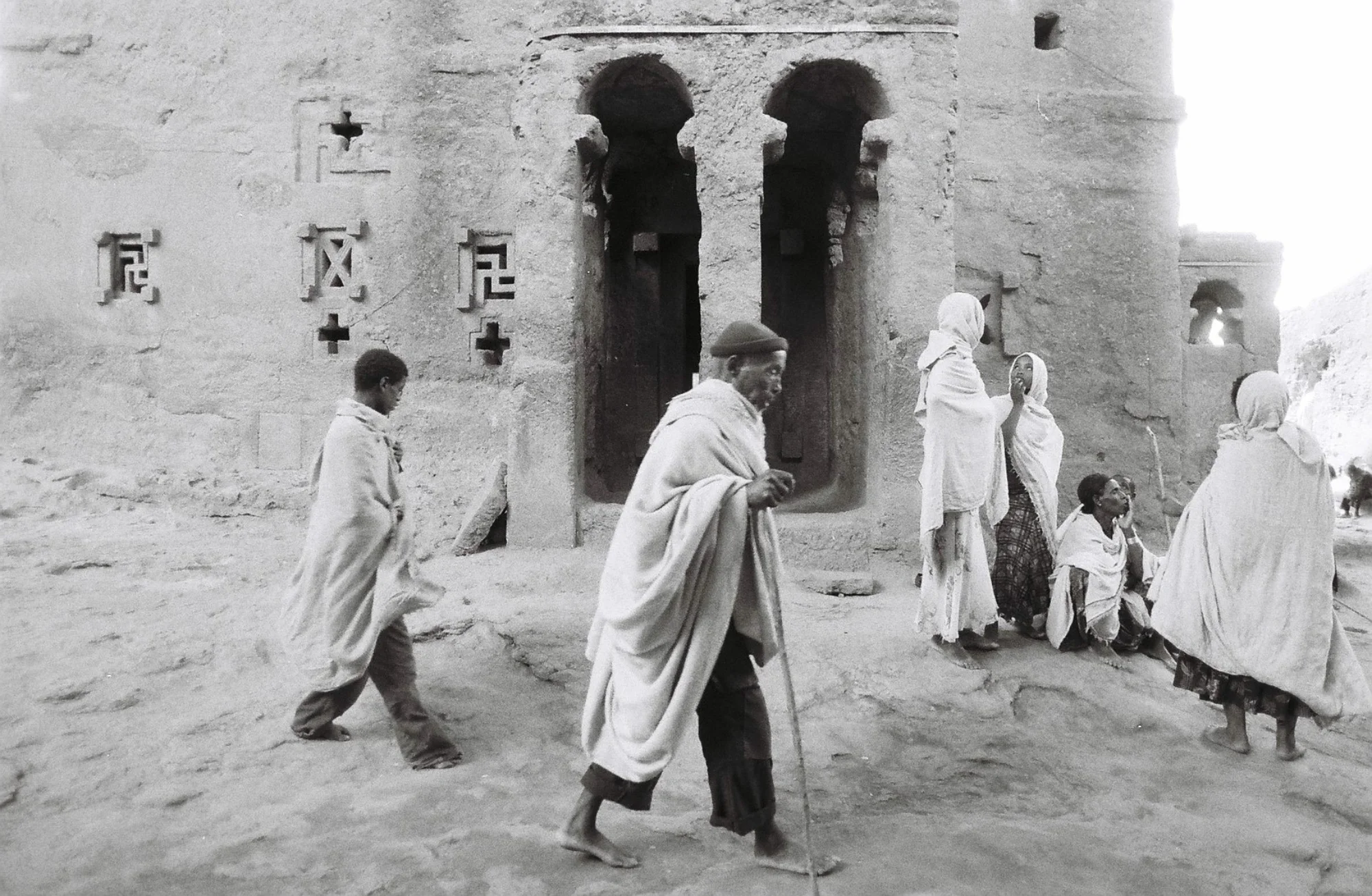
Pilgrims shrouded in traditional white woven cotton, walk barefoot great distances to pray among the sacred Churches during Orthodox Christmas. Many sleep on the ground outside entrance ways, or share camps in the surrounding area.
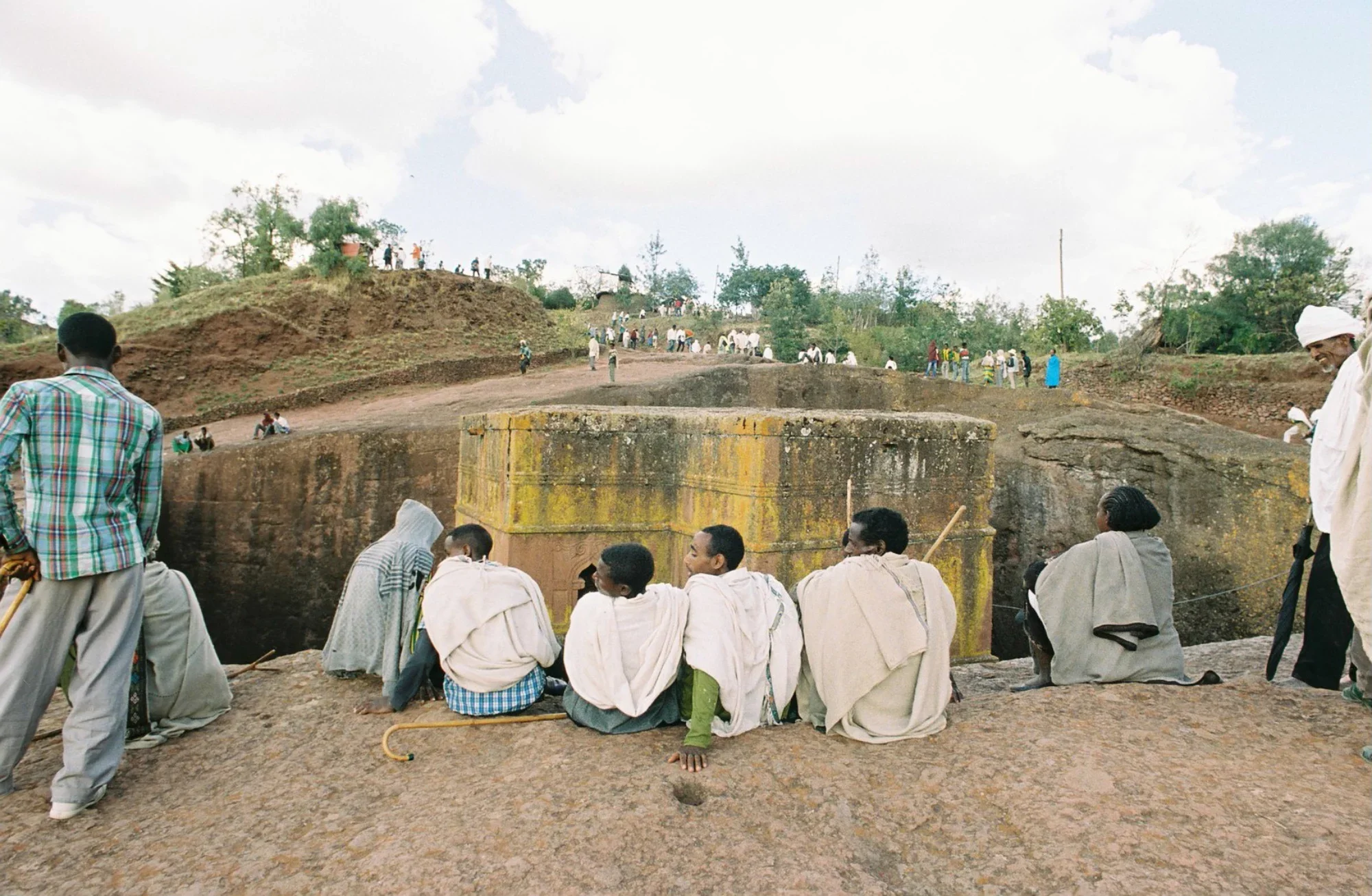
A moment to relax, pilgrims sit along the edge of the earthen wall that surrounds the rock-hewn Church of St. George.
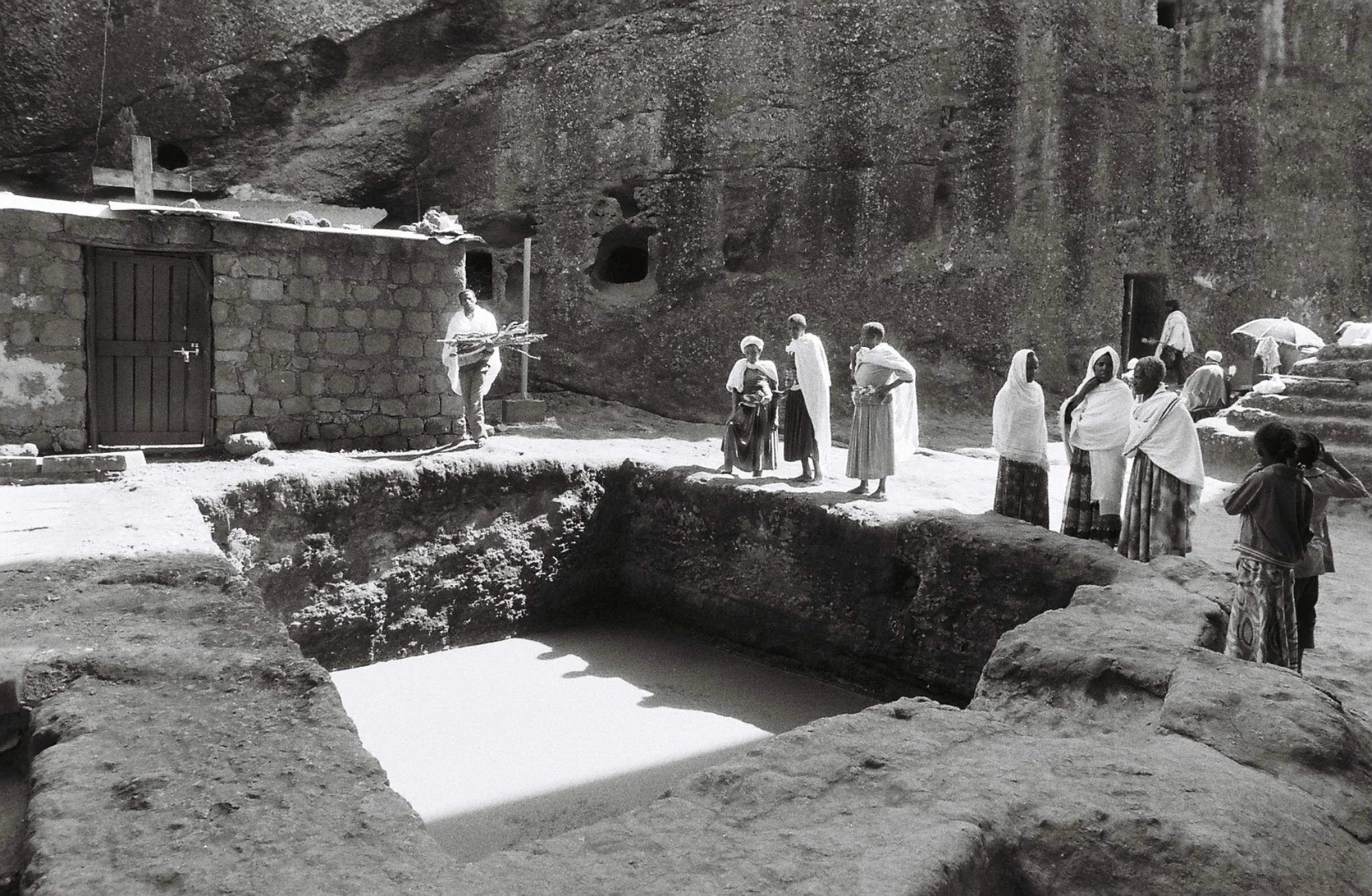
Pilgrims chat quietly near a half-filled pool of water outside the churches of Lalibela.
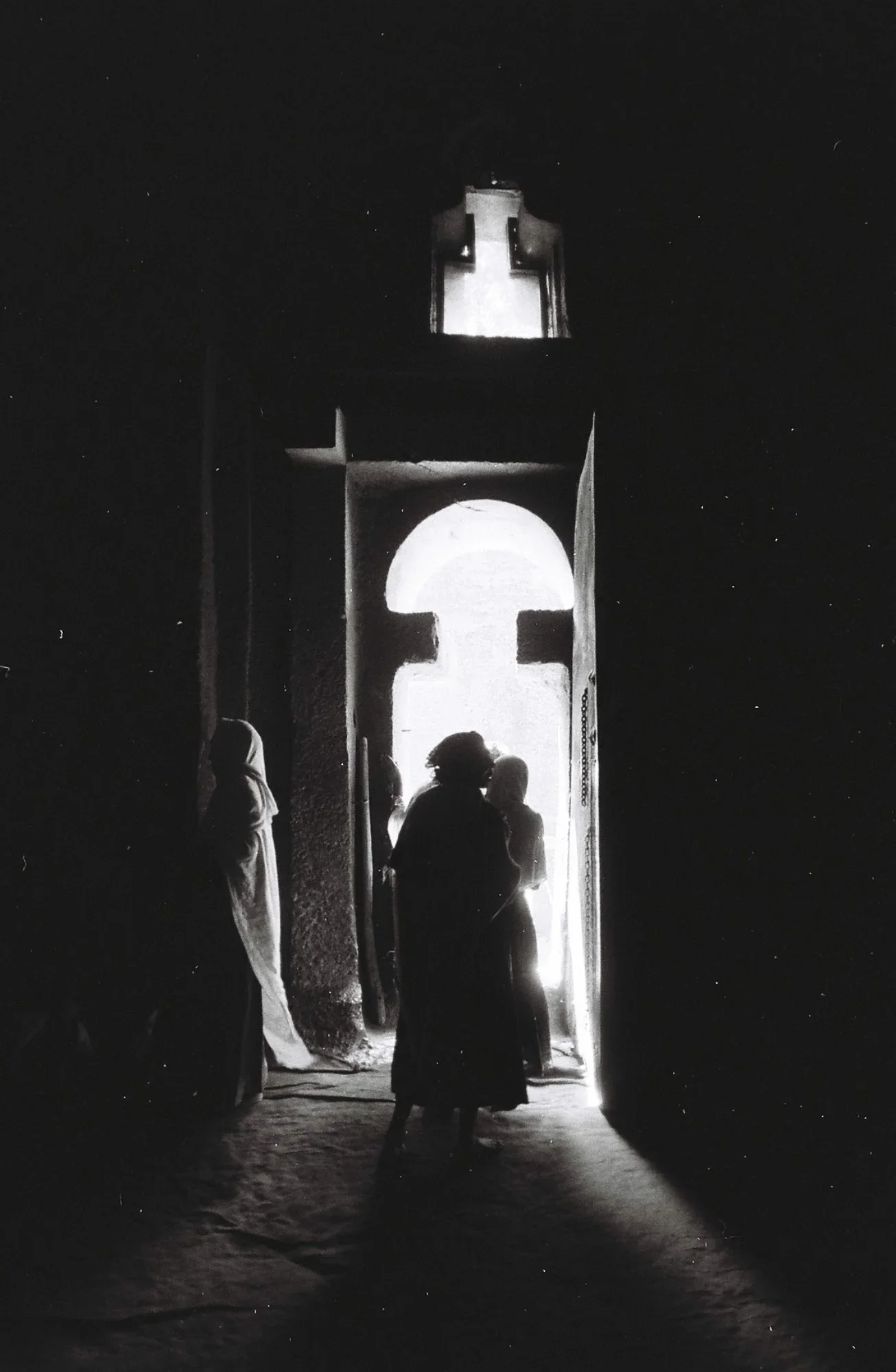
The interiors of these rock-hewn Churches are small and dimly lite. Pilgrims find a spot to sit on the floor to pray or sleep as a steady stream of devotees make offerings.
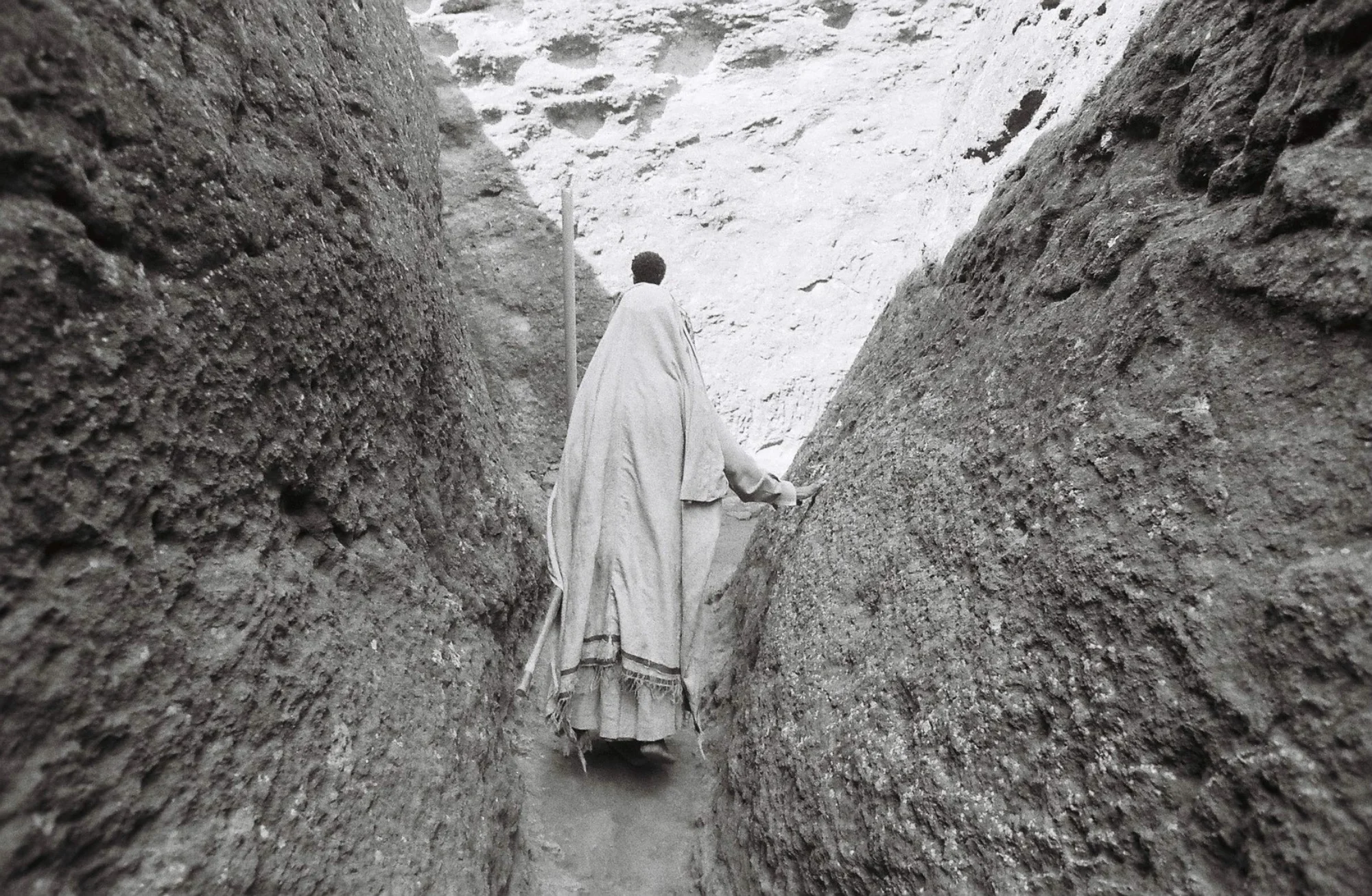
A pilgrim steadies herself as she navigates the narrow pathways within Lalibela.
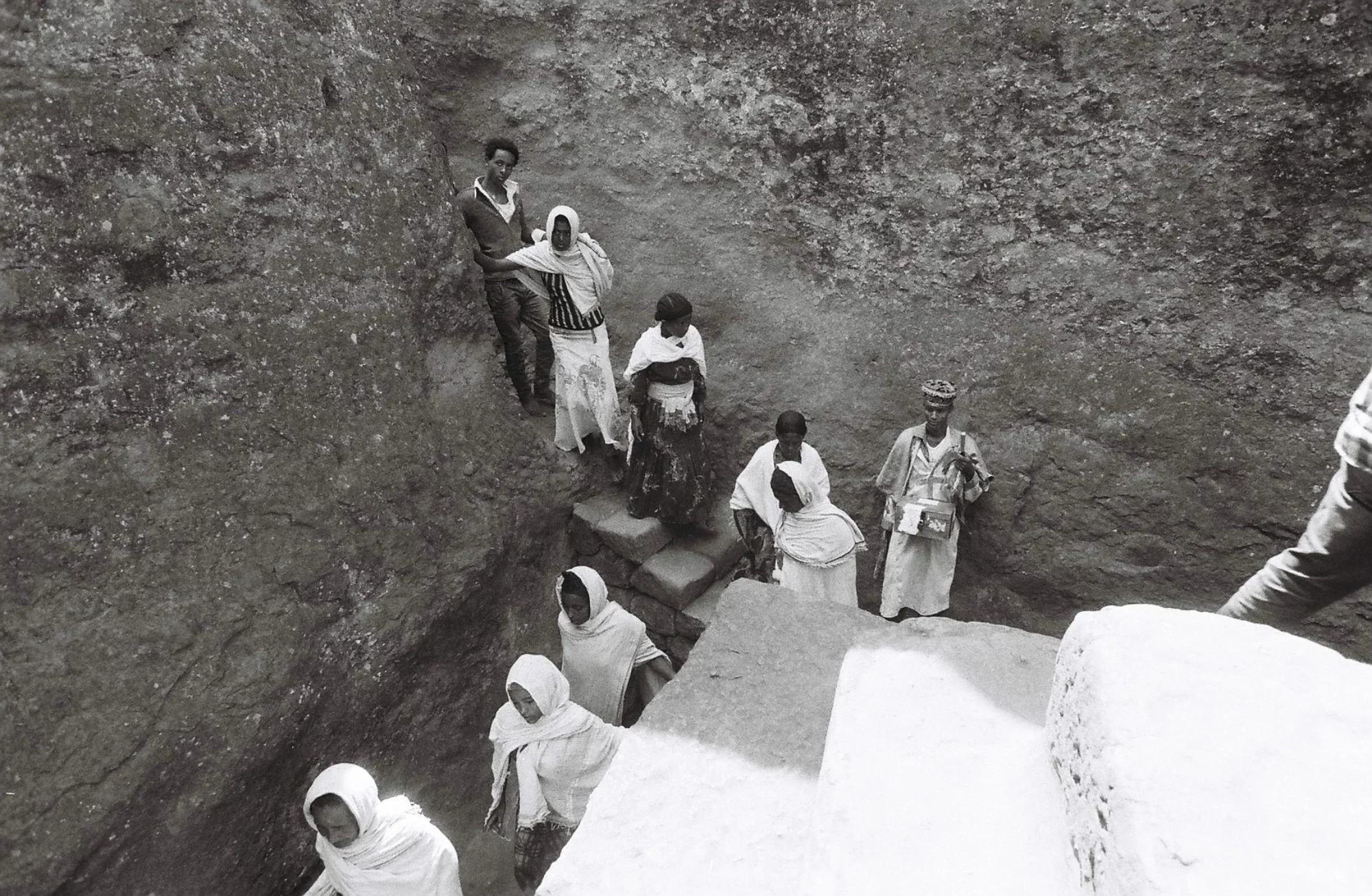
Pilgrims navigate the narrow tunnels which connect the sacred Churches of Lalibela.
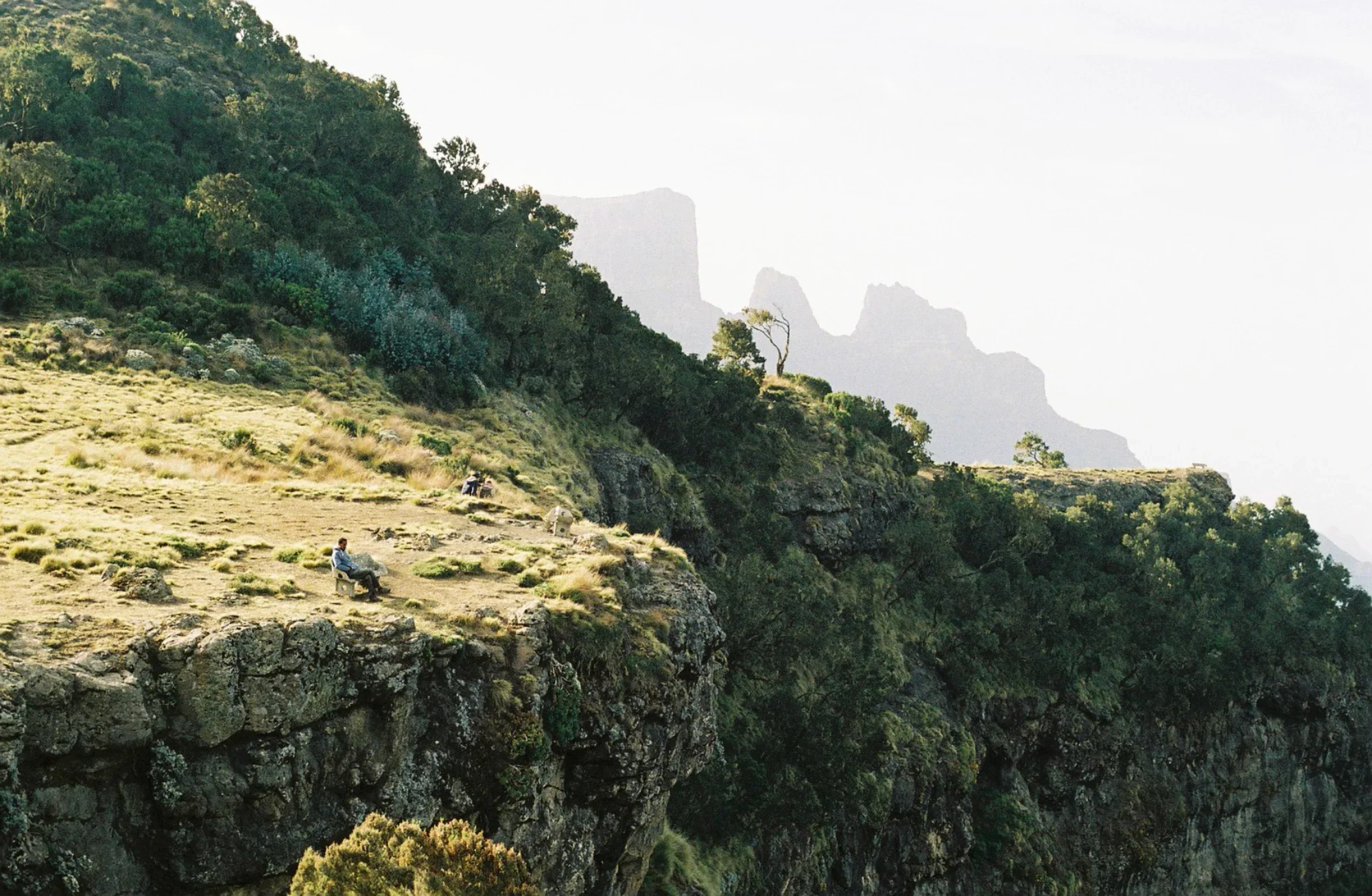
A man takes in the view of the Rift Valley during sunrise from the Chenneck camp at 3600m.
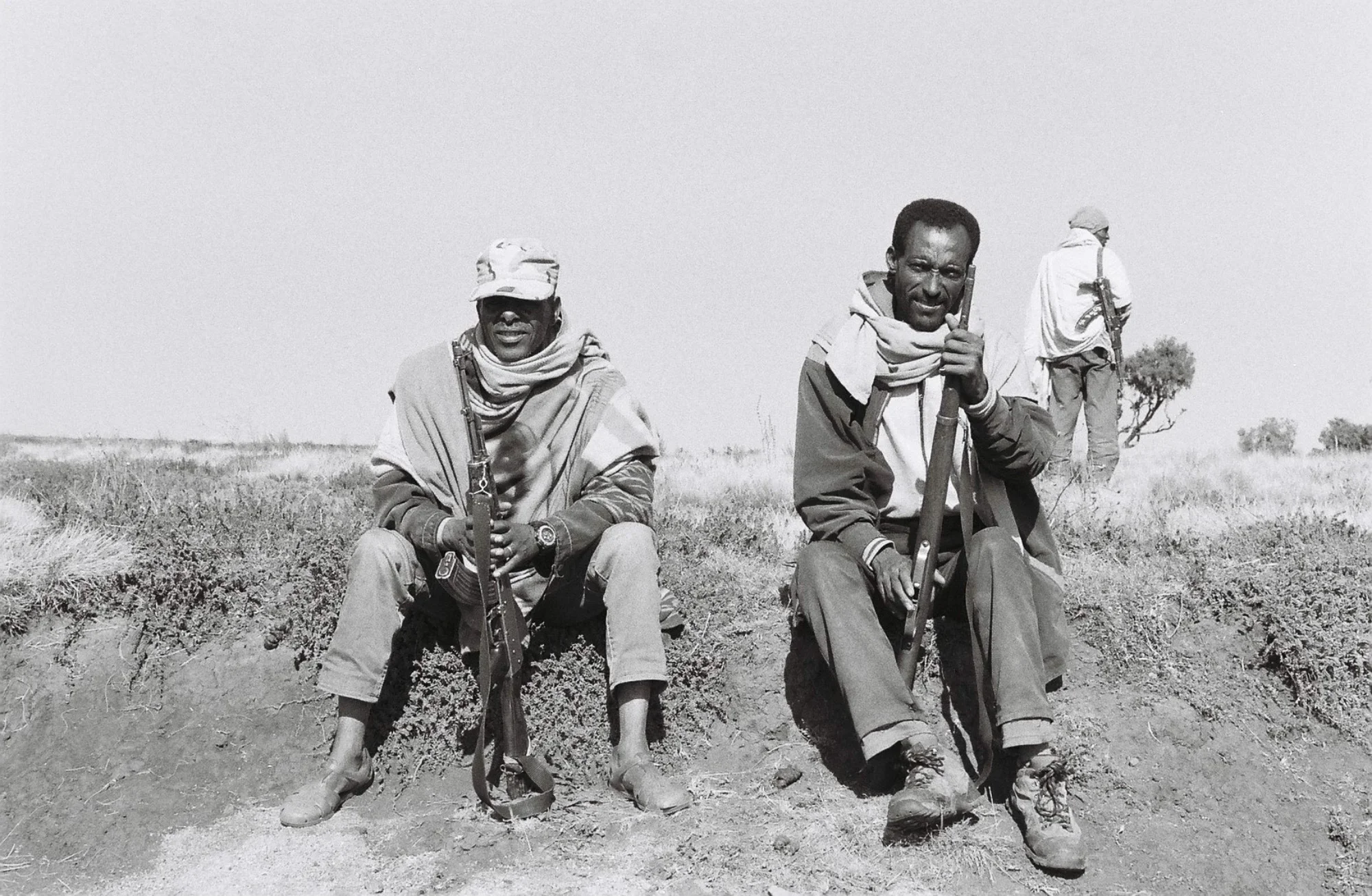
Scouts watch over tourists exploring the Simien Mountains. They are local men who pick up work from tour guides operating out of Debark. They carry Kalishnakov's and sleep on the ground outside tourist tents, often huddle together by a small fire.
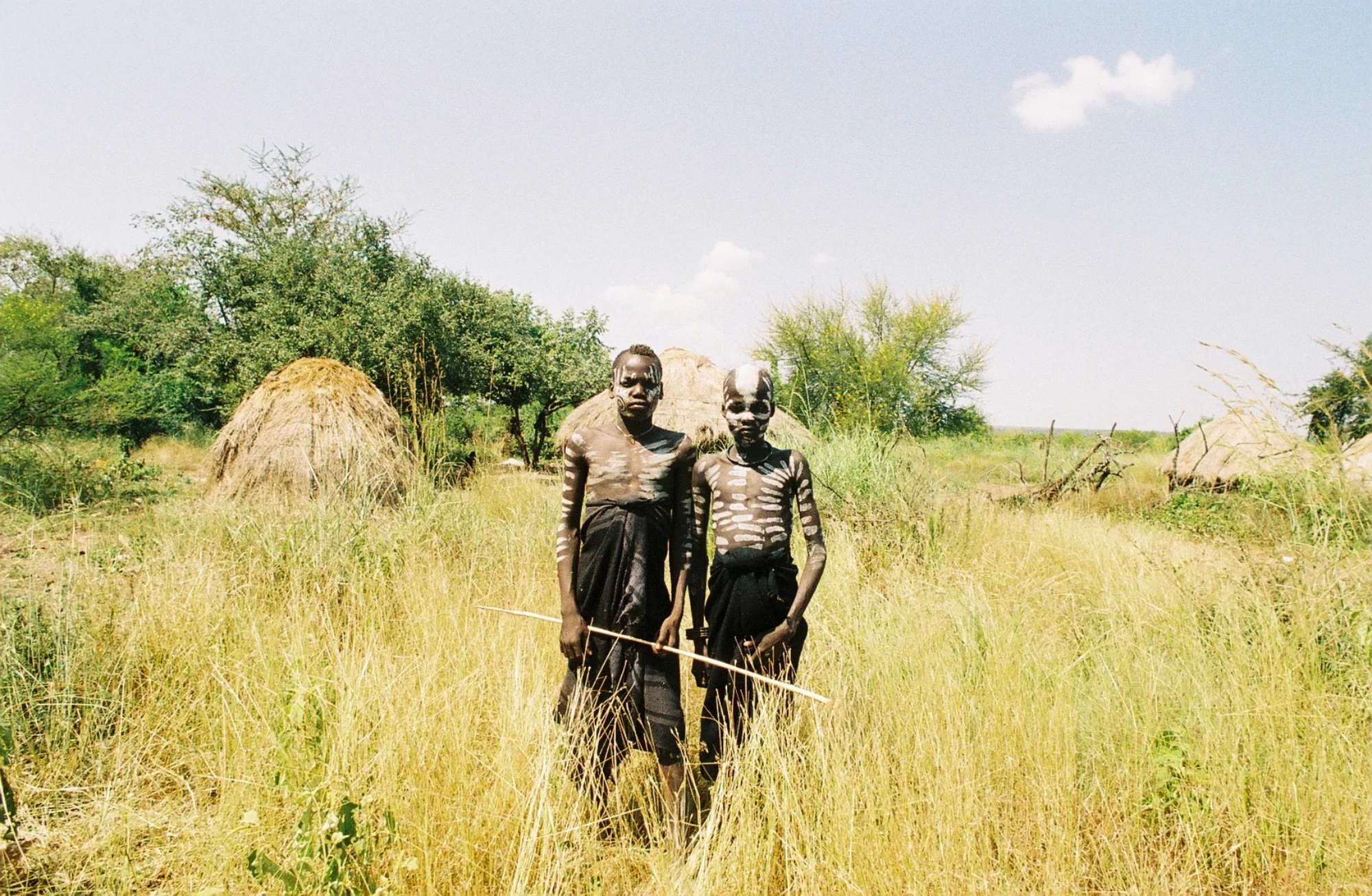
Two young members of the Mursi tribe in Ethiopia's Omo Valley stand stoically together. The community is becoming used to seeing tourists, and intentionally "dress-up" to capitalize on photo opportunities. As more tourists travel into the tribal region of the Omo Valley, the communities struggle with cultural differences.
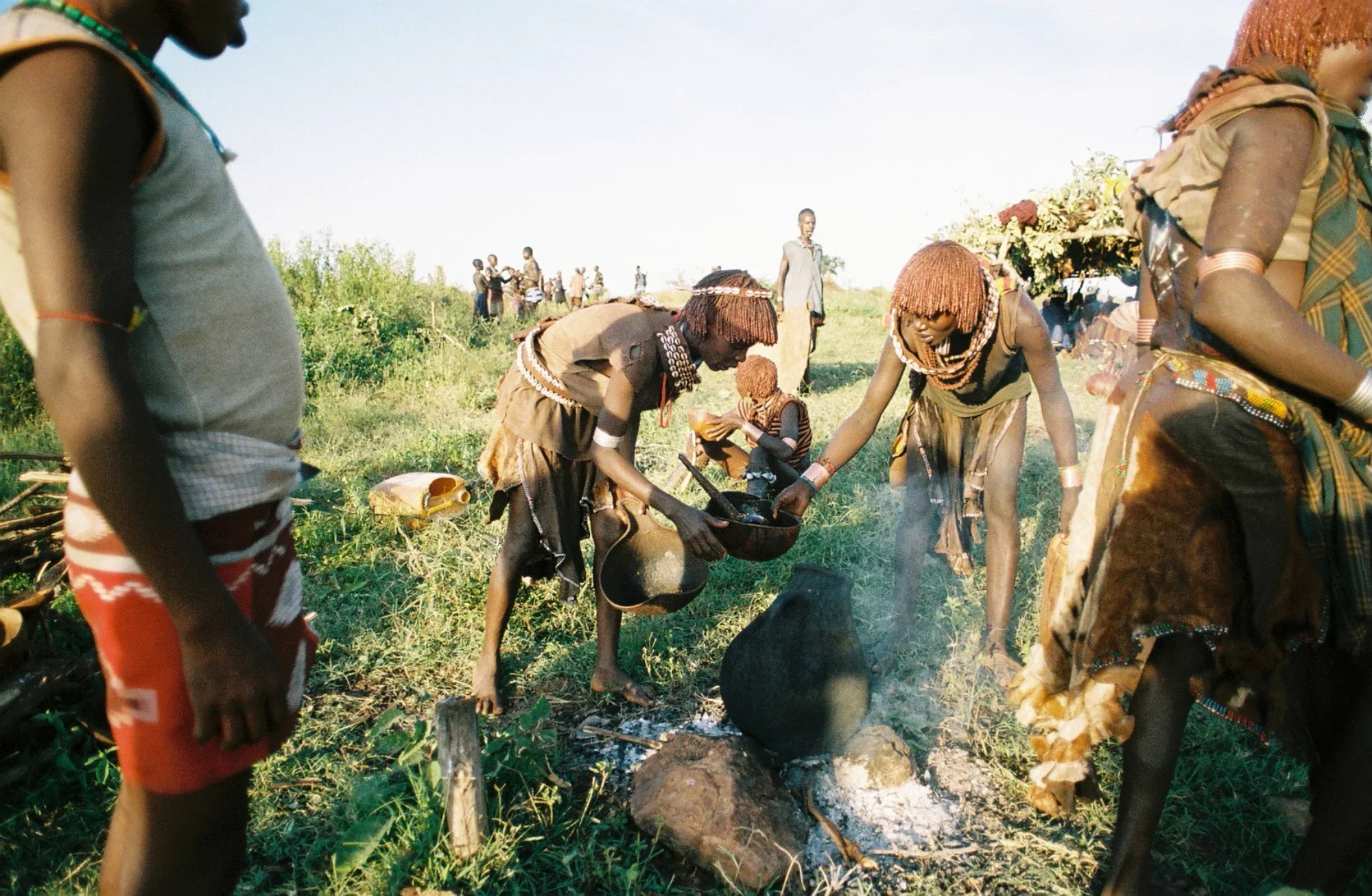
Women of the Hamar tribe prepare food in celebration of a traditional manhood ceremony.
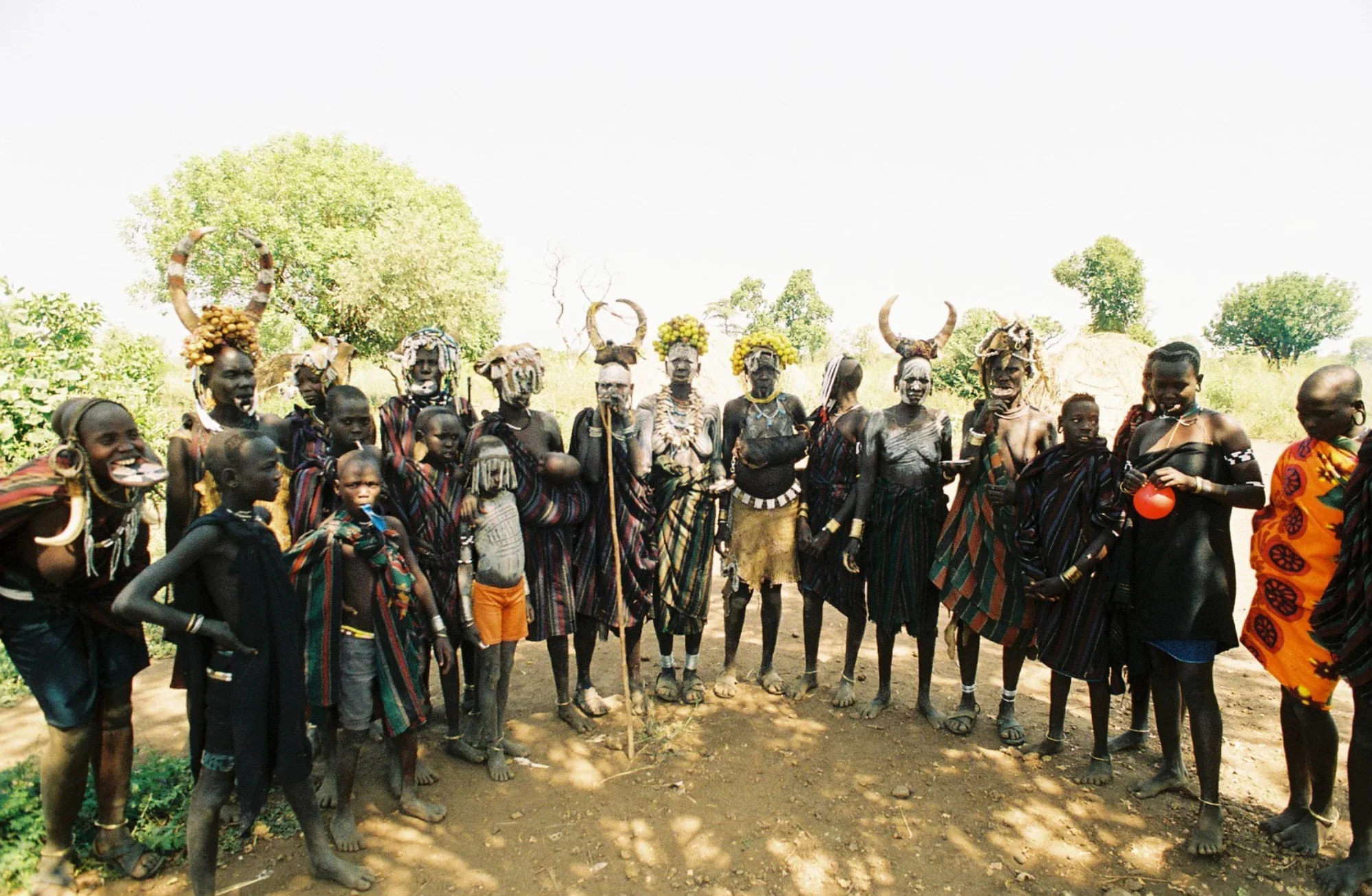
Members of the Mursi tribe stand together for a group portrait.